
This post contains affiliate links, which means I’ll receive a commission if you purchase through my link, at no extra cost to you. Please read the full disclosure here.
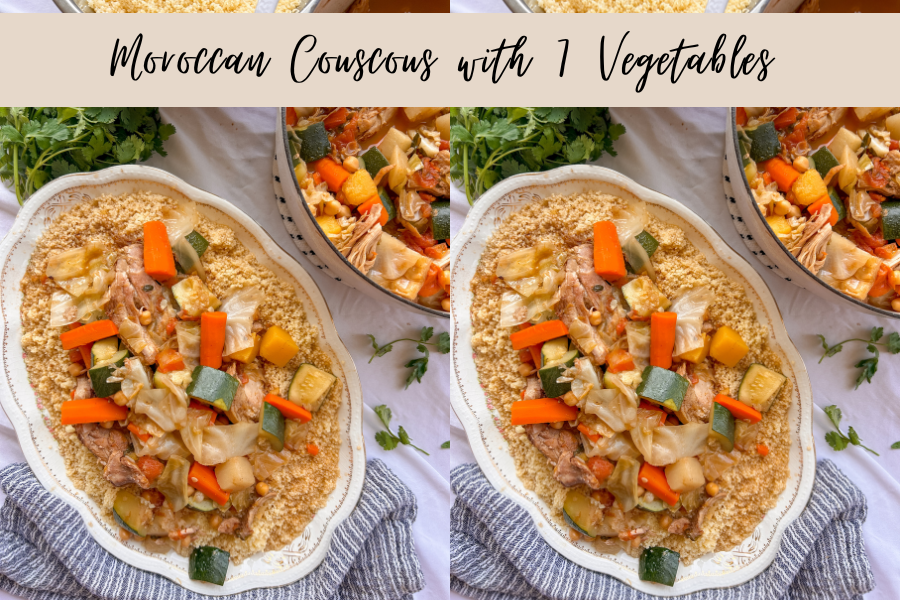
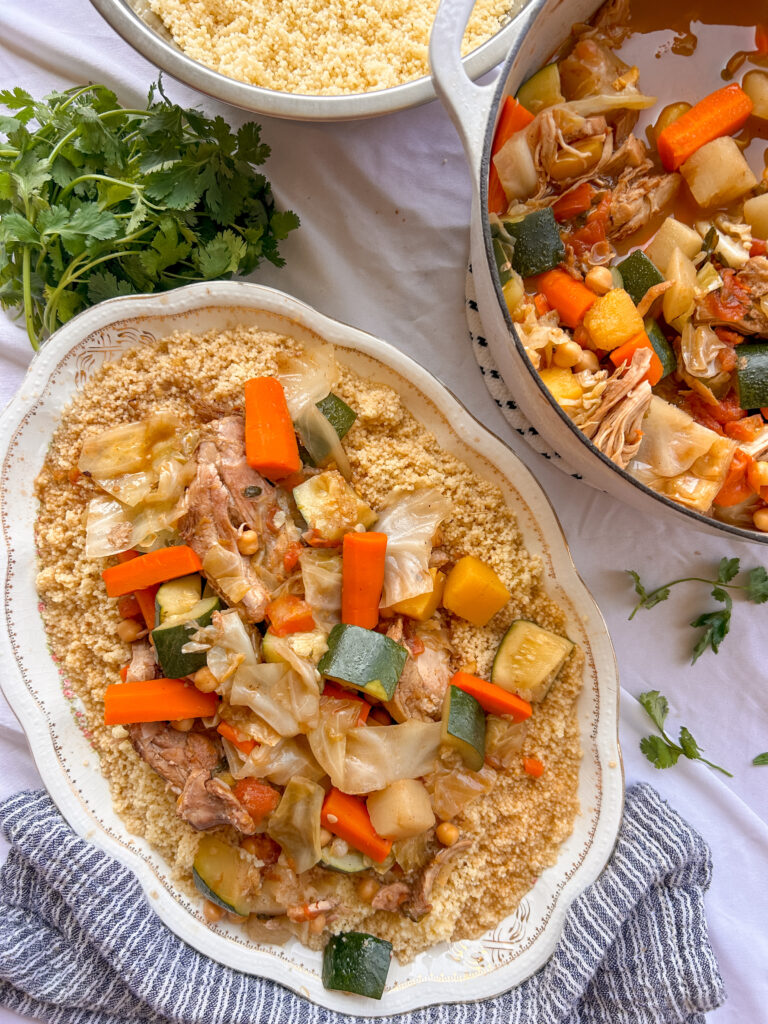
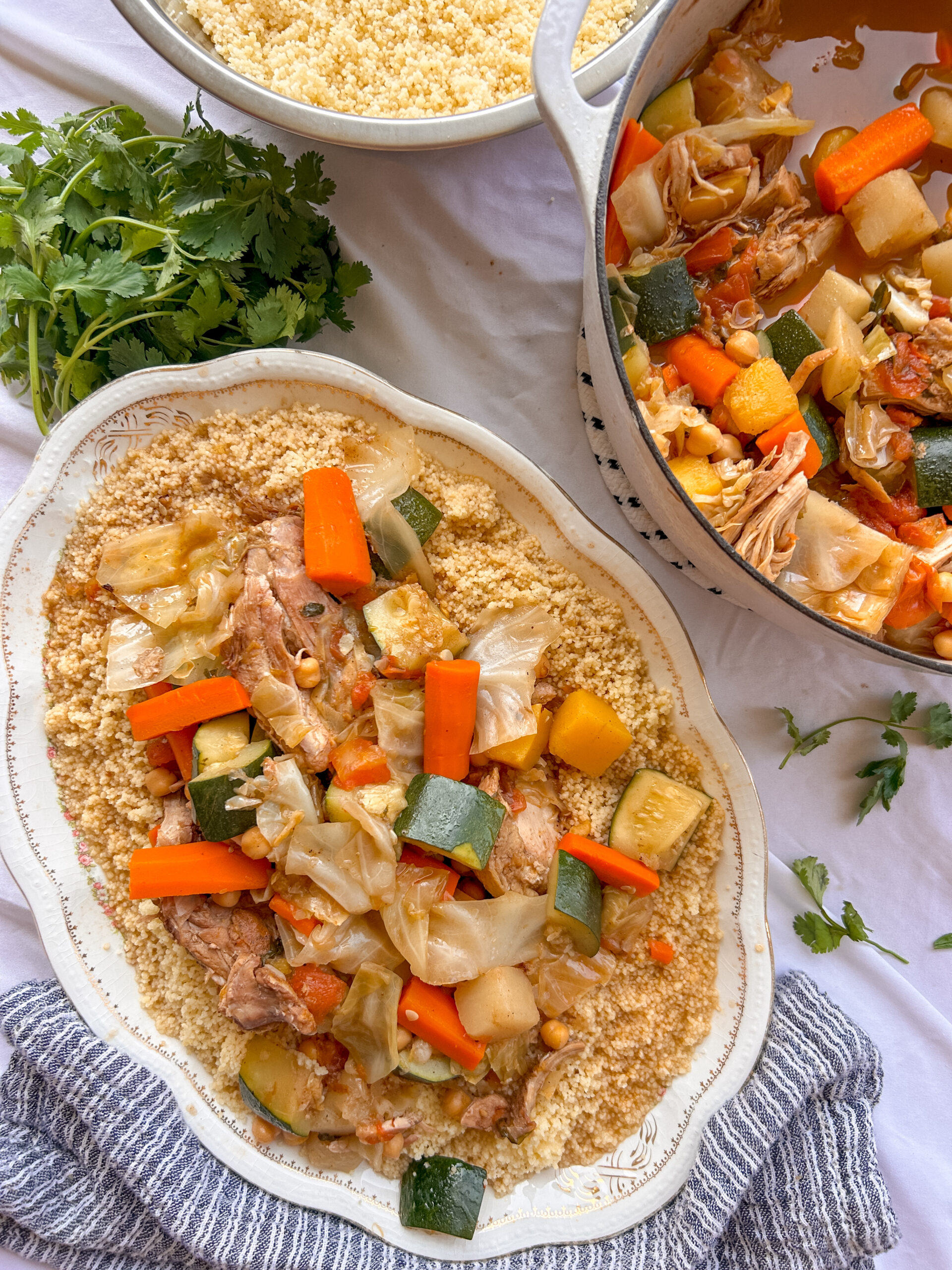
A big platter of Moroccan Couscous piled high with fluffy couscous, tender chicken, colorful vegetables, chickpeas, and fragrant broth is the kind of meal that instantly brings everyone to the table. Every bite is warm, comforting, and packed with the rich flavors of ginger, turmeric, cumin, and fresh herbs.
Inspired by Morocco’s traditional couscous with seven vegetables, this recipe makes the classic dish approachable for home cooks without sacrificing the flavors that make it so beloved. Using The Spice Girl Kitchen Moroccan Seasoning and an easy couscous method, you’ll have an impressive meal that’s perfect for Sunday dinner, family gatherings, or anytime you want something hearty and comforting.
What Is Moroccan Couscous?
Moroccan Couscous refers to both the tiny granules of steamed semolina and the complete dish served throughout Morocco. While many people think of couscous as a simple side dish, traditional Moroccan couscous is a full meal consisting of fluffy couscous topped with meat, vegetables, chickpeas, and plenty of flavorful broth.
Unlike pearl (Israeli) couscous, Moroccan couscous is much smaller and traditionally steamed several times until incredibly light and fluffy. It’s often served family-style on a large platter, with everyone gathering around the table to enjoy the meal together.
Friday couscous is one of Morocco’s most cherished traditions, but it’s also served for holidays, celebrations, and family gatherings throughout the year.
What Is Moroccan Couscous with Seven Vegetables?
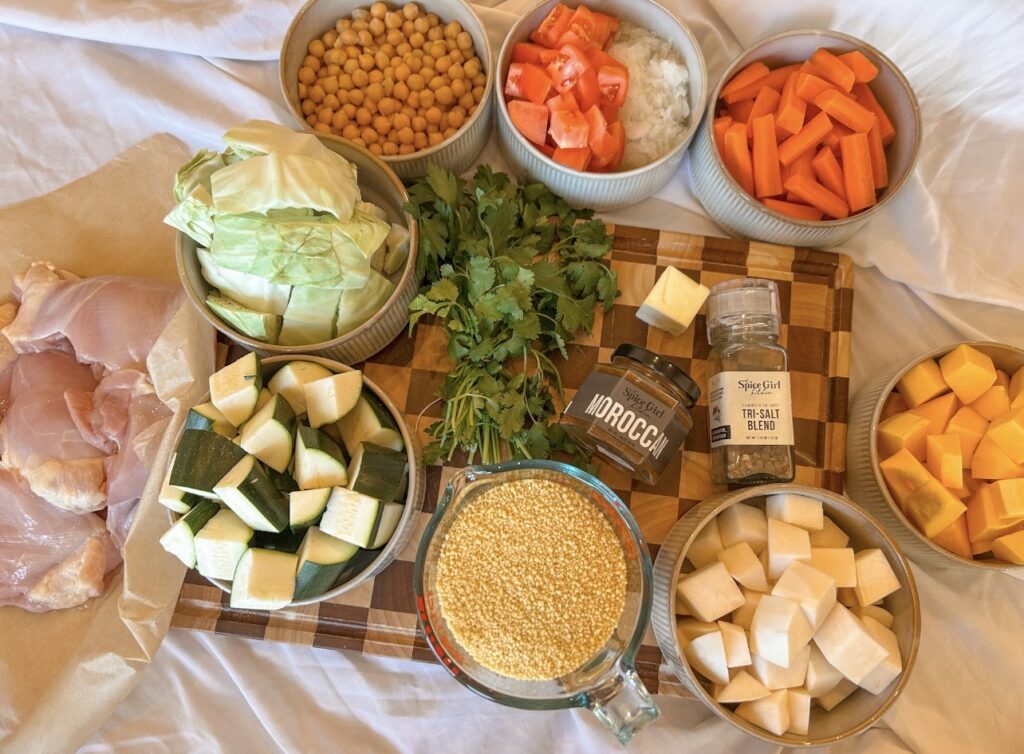
One of the most beloved versions of Moroccan Couscous is couscous with seven vegetables. Despite the name, the exact vegetables vary from family to family and often depend on what’s in season.
This recipe includes:
- Onion
- Tomatoes
- Turnip
- Carrots
- Cabbage
- Butternut squash
- Zucchini
Chickpeas are also traditionally added, although they are generally considered separate from the seven vegetables themselves.
Everything simmers together in a warmly spiced broth before being arranged over fluffy couscous for a meal that is both rustic and elegant.
Why You’ll Love This Recipe
- Traditional Moroccan flavors made approachable for home cooks
- A complete meal with chicken, vegetables, chickpeas, and couscous
- Warm, aromatic spices without overwhelming heat
- Perfect for family dinners or entertaining
- Uses one pot for the chicken, vegetables, and broth
- Includes an easy couscous method plus instructions for a traditional steaming option
- Made with The Spice Girl Kitchen Moroccan Seasoning
Ingredients You’ll Need
Chicken
Boneless skinless chicken thighs create an incredibly flavorful broth while staying tender during the long simmer. They also add richness that makes the finished dish taste like it has been cooking all day. If you prefer, bone-in chicken drumsticks or a combination of thighs and drumsticks also work beautifully.
Couscous
Use regular Moroccan couscous, sometimes labeled as fine or medium couscous. Do not substitute pearl couscous, which is much larger and cooks differently.
This recipe uses the easy covered-bowl method for preparing the couscous, but you’ll also find instructions later in the post for the traditional steamed method.
The Seven Vegetables
Large pieces of vegetables are one of the defining characteristics of Moroccan Couscous.
Each vegetable brings something different to the broth:
- Onion creates the savory foundation.
- Tomatoes add body and richness.
- Turnips contribute an earthy flavor.
- Carrots provide natural sweetness.
- Cabbage becomes silky and absorbs the broth.
- Butternut squash adds sweetness and a creamy texture.
- Zucchini cooks quickly and balances the firmer vegetables.
Cutting the vegetables into large pieces helps them stay intact throughout cooking while creating the beautiful presentation this dish is known for.
Chickpeas
Chickpeas add protein, texture, and a subtle nuttiness that pairs perfectly with the vegetables and broth.
Canned chickpeas make this recipe simple enough for a weeknight, although cooked dried chickpeas work just as well.
Moroccan Seasoning
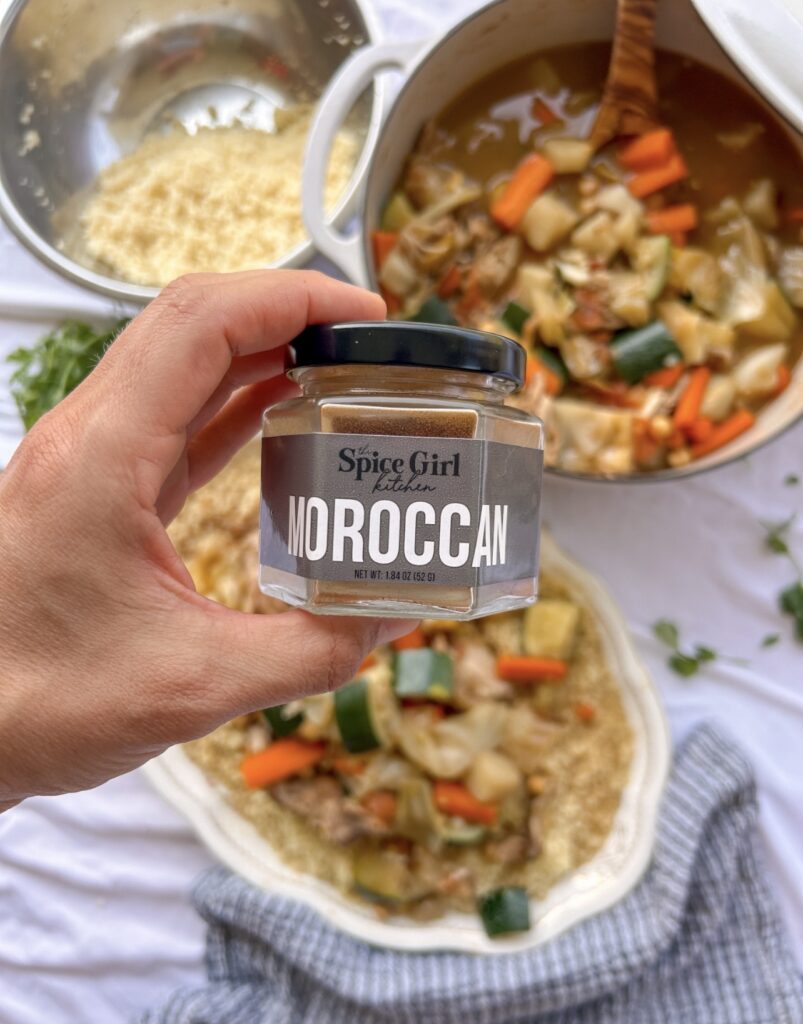
The Spice Girl Kitchen Moroccan Seasoning provides the warm blend of spices that gives this broth its signature flavor.
Don’t have it? Substitute:
- 1½ teaspoons ground ginger
- 1 teaspoon turmeric
- ¾ teaspoon black pepper
- ½ teaspoon ground cumin
- ¼ teaspoon ground cinnamon
Fresh Parsley and Cilantro
Rather than chopping the herbs into the finished dish, they’re simmered in the broth to gently infuse it with fresh herbal flavor.
Removing the herb bundle before serving leaves the broth clean while preserving all of the flavor.
Water
Traditional Moroccan couscous is commonly made using water rather than prepared broth. As the chicken, vegetables, herbs, and spices simmer together, they naturally create an incredibly rich, flavorful broth.
If you prefer, chicken broth can be substituted for an even richer flavor, but reduce the salt slightly and adjust to taste.
Butter or Olive Oil
A little butter or olive oil stirred into the couscous after steaming keeps the grains fluffy and separate while adding richness. For a dairy-free version, simply use olive oil.
How to Make Moroccan Couscous
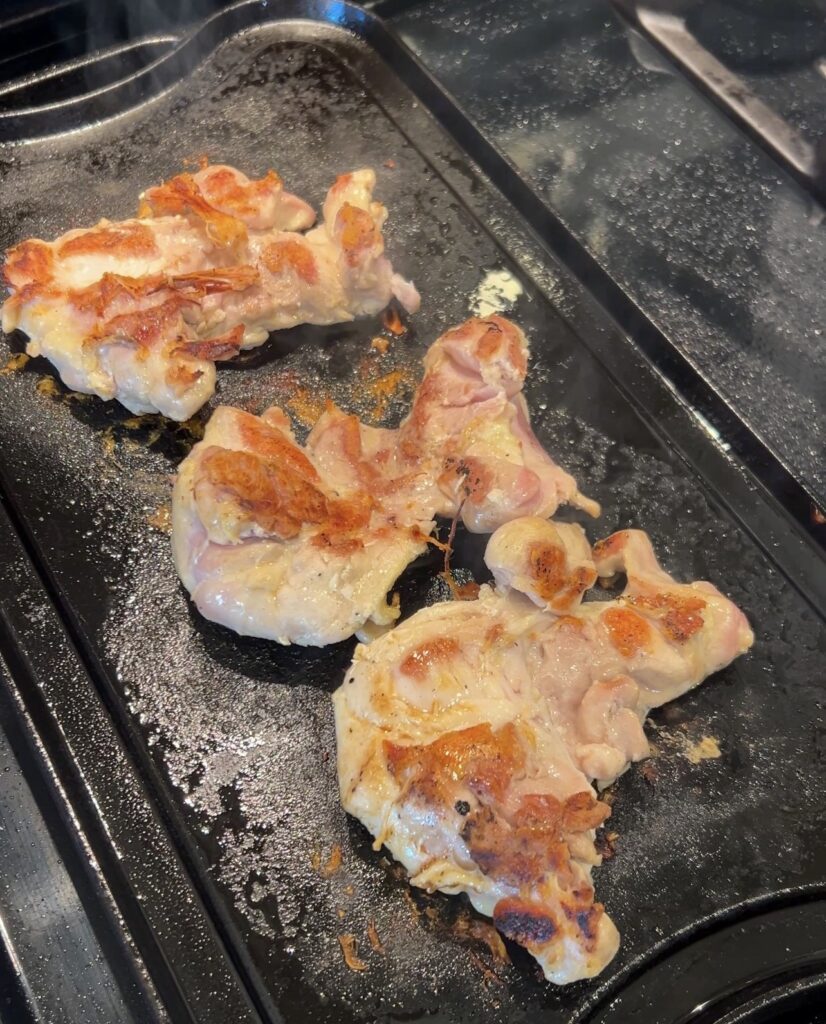
Brown the Chicken
Season the chicken with salt, then brown it in olive oil until lightly golden on both sides. The chicken doesn’t need to be fully cooked at this stage – you’re simply building flavor for the broth.
Build the Broth
Cook the onion until softened, then stir in the tomatoes and Moroccan Seasoning. Allow the tomatoes to break down before returning the chicken to the pot with the water and fresh herbs.
As everything simmers together, the chicken, vegetables, herbs, and spices create a deeply flavorful broth without needing prepared stock.
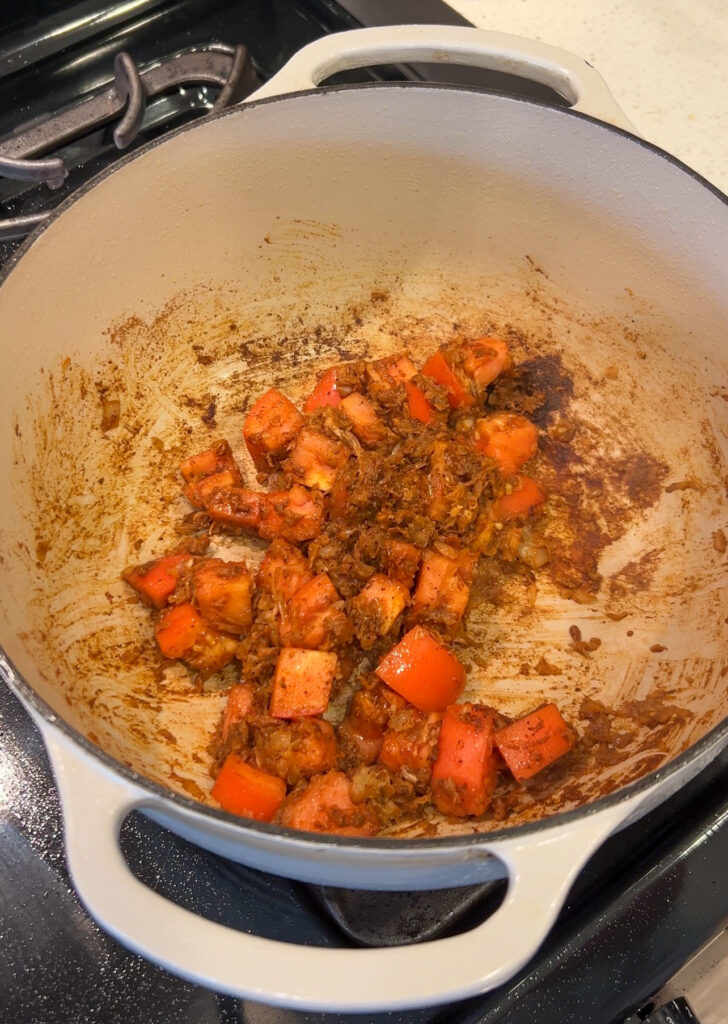
Simmer the Chicken
Allow the chicken to gently simmer before adding any vegetables. This gives the meat time to become tender while developing the rich, aromatic broth that makes Moroccan Couscous so special.
Avoid boiling the broth aggressively, as a gentle simmer keeps both the chicken and vegetables intact.
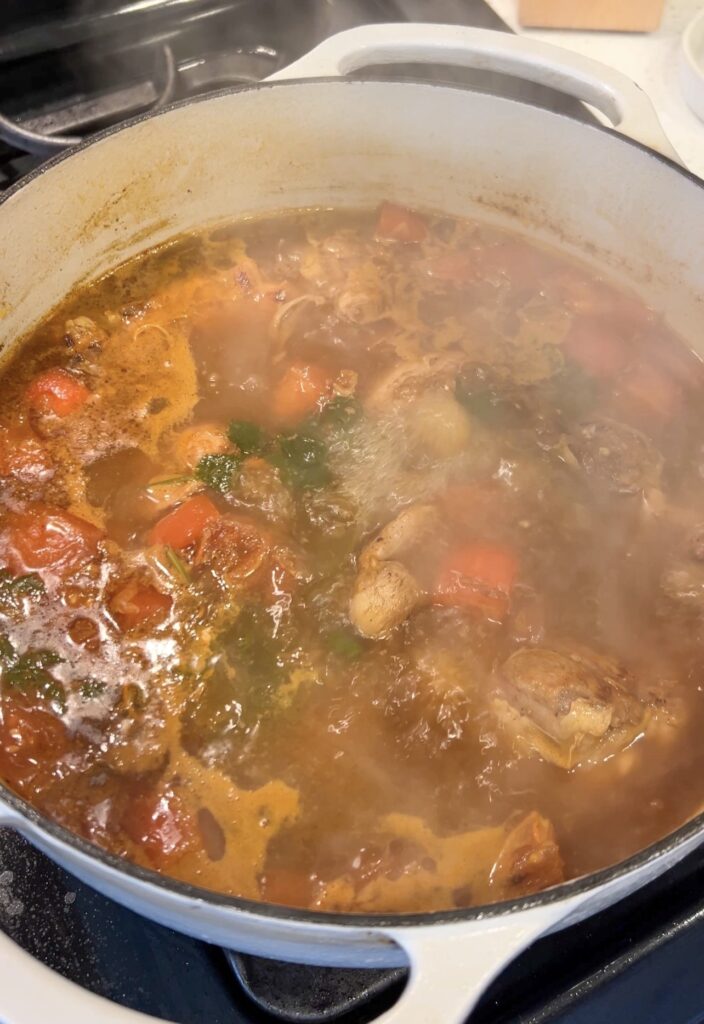
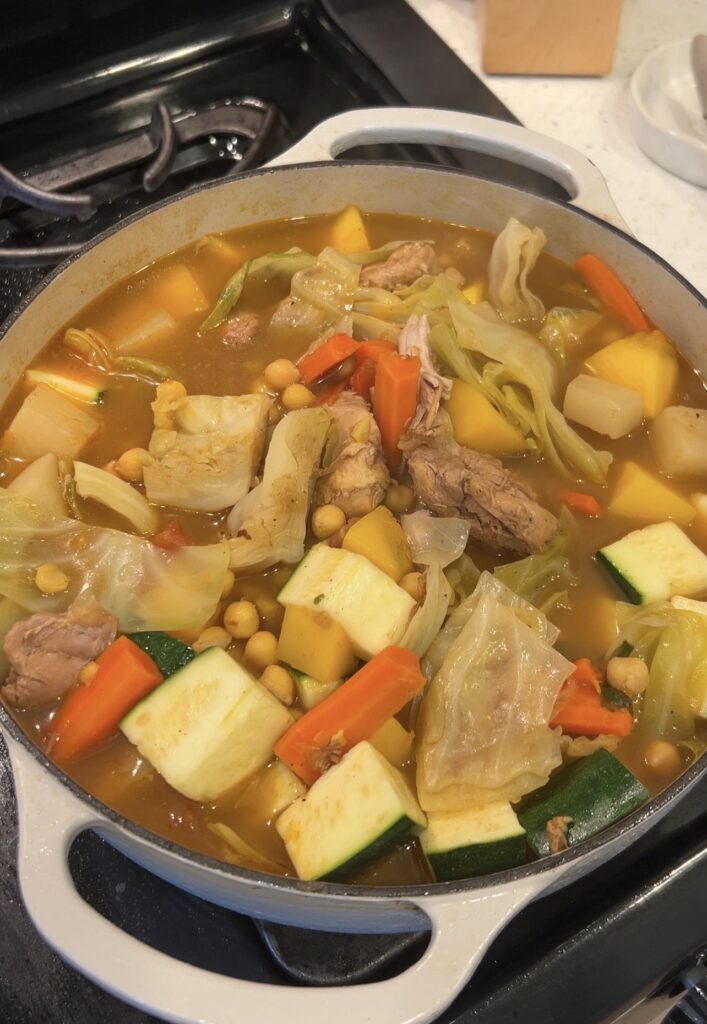
Add the Firm Vegetables
Turnips, carrots, and cabbage require the longest cooking time, so they go into the pot first.
Keep the vegetables in large pieces rather than cutting them into bite-sized chunks. This is traditional and helps them hold their shape throughout cooking.
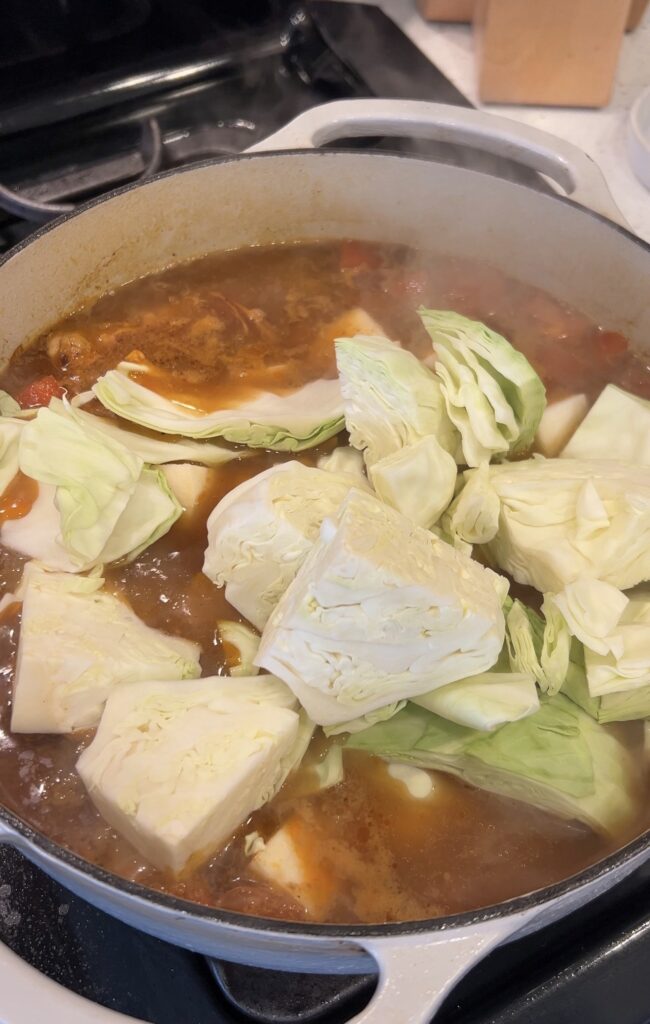
Add the Butternut Squash
Once the firmer vegetables have started to soften, add the squash.
Adding it later prevents it from becoming overly soft or falling apart in the broth.
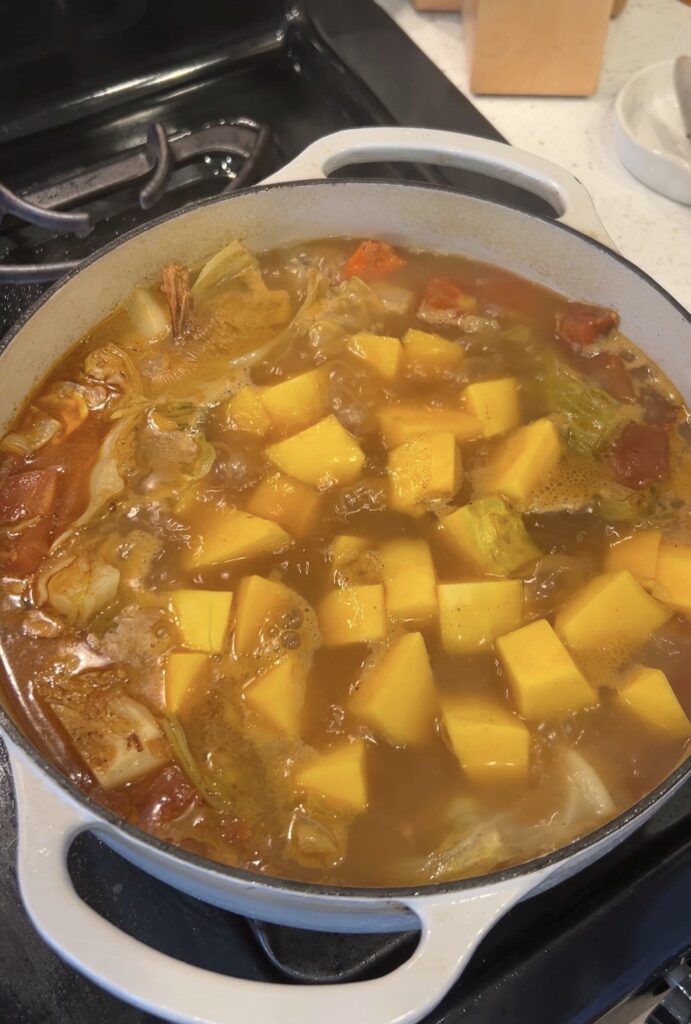
Finish with the Zucchini and Chickpeas
Zucchini cooks very quickly, so it should be added near the end along with the chickpeas.
Continue simmering until the vegetables are tender, the chicken reaches an internal temperature of 165°F, and the broth is well seasoned.
Prepare the Couscous
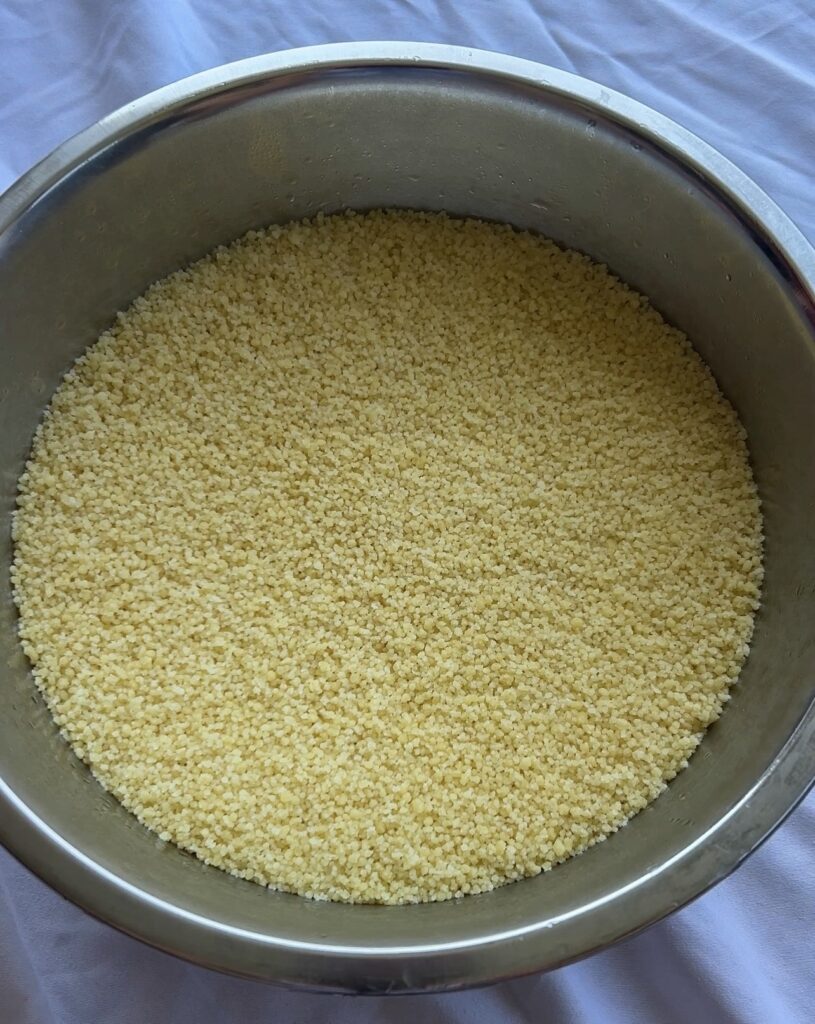
While the broth finishes cooking, prepare the couscous.
Coat the dry couscous with olive oil, then pour hot water or broth over it. Cover and allow it to steam until tender before fluffing thoroughly with butter or olive oil.
The goal is light, separate grains rather than clumps.
Assemble the Platter
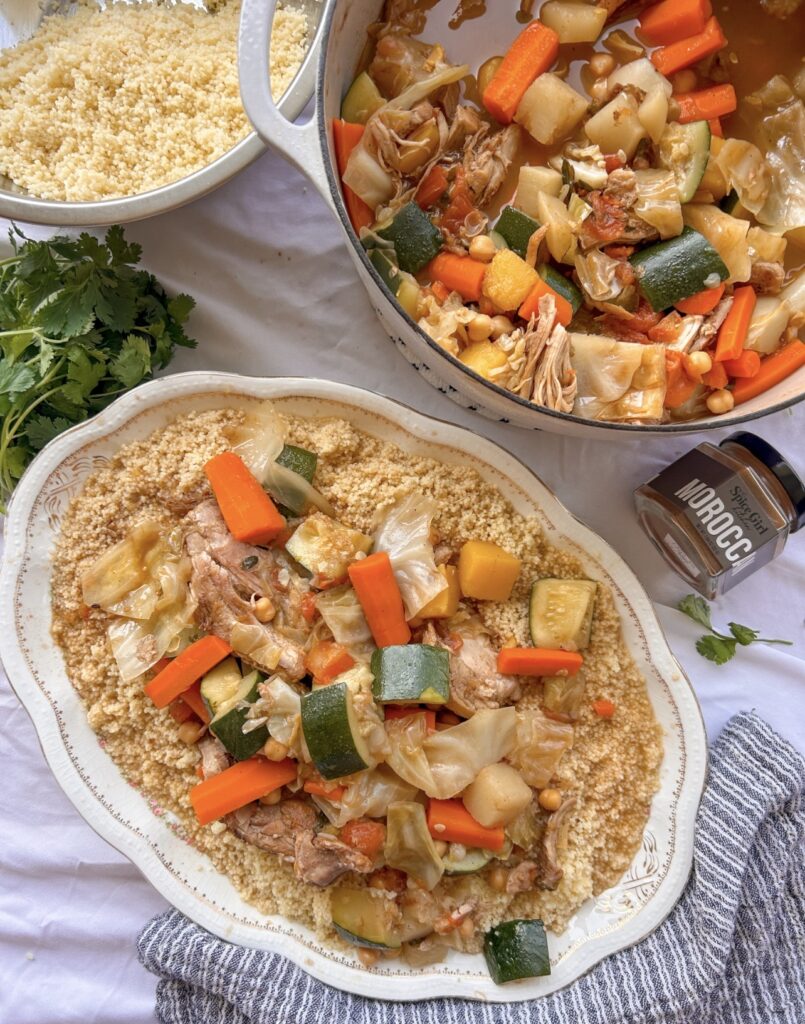
Spread the fluffy couscous across a large serving platter, creating a shallow well in the center.
Arrange the chicken in the middle and surround it with the vegetables and chickpeas. Then spoon some of the hot broth over the couscous.
Serve the remaining broth alongside so everyone can add as much as they’d like.
Traditional Steamed Couscous Method
Authentic Moroccan Couscous is traditionally steamed several times in a couscoussier rather than simply soaking it in hot liquid.
After lightly moistening the dry couscous with water and olive oil, it’s steamed over the simmering broth for about 20 minutes. The couscous is then transferred to a large bowl, sprinkled with more water, gently separated by hand, and steamed again. Many Moroccan cooks repeat this process three times before finishing the couscous with butter, olive oil, or smen (aged butter).
While that method produces exceptionally light, fluffy couscous, the covered-bowl method used in this recipe is much more practical for most home kitchens while still delivering excellent results.
Tips for the Best Moroccan Couscous
Use Regular Moroccan Couscous
Fine or medium Moroccan couscous creates the authentic texture. Pearl couscous is a completely different pasta and shouldn’t be substituted.
Keep the Vegetables Large
Large pieces hold their shape during simmering and create the beautiful presentation traditional Moroccan Couscous is known for.
Add the Vegetables in Stages
Different vegetables cook at different rates. Adding them gradually prevents the zucchini from becoming mushy while allowing the carrots and turnips enough time to become tender.
Don’t Rush the Broth
The broth is the heart of the dish. Allow enough simmering time for the chicken, herbs, vegetables, and spices to develop a rich, balanced flavor before serving.
Taste Before Serving
The broth should be well seasoned because it flavors both the vegetables and the couscous. Taste it just before assembling the platter and adjust the salt or Moroccan Seasoning if needed.
Serve Plenty of Broth
Don’t pour all of the broth over the couscous at once. Serve extra broth at the table so everyone can moisten their own serving.
Recipe Variations
Moroccan Couscous with Lamb
Lamb shoulder or lamb shanks are a classic choice and create an even richer broth. Simply increase the initial simmering time before adding the vegetables.
Moroccan Couscous with Beef
Bone-in beef chuck or beef shanks also work beautifully and develop wonderful flavor after a longer simmer.
Vegetarian Moroccan Couscous
Omit the chicken and use vegetable broth or water instead. Increase the chickpeas to two cans and add a little extra olive oil for richness.
Make It Spicy
Traditional Moroccan couscous isn’t particularly spicy, but harissa is commonly served alongside the meal so everyone can adjust the heat to their liking.
How to Serve Moroccan Couscous
The traditional presentation is part of what makes Moroccan Couscous so memorable.
Spread the couscous across a large serving platter before arranging the chicken in the center and the vegetables around it. Spoon some broth over the couscous and serve the remaining broth separately.
For an authentic Moroccan-inspired meal, pair it with:
- Harissa
- Warm Moroccan bread
- A simple tomato and cucumber salad
- Fresh mint tea
Because the dish already includes protein, vegetables, starch, and broth, it doesn’t need many side dishes to feel complete.
Storage and Reheating
Storage
Store the couscous separately from the chicken, vegetables, and broth whenever possible. Refrigerate in airtight containers for up to 4 days.
Reheating
Warm the broth, chicken, and vegetables gently on the stovetop until heated through. Sprinkle the couscous with a splash of water or broth before microwaving, then fluff it with a fork before serving.
Freezing
The chicken and broth freeze well for up to 3 months. The vegetables, especially zucchini and squash, become much softer after thawing, so this recipe is best enjoyed fresh.
Frequently Asked Questions
Is Moroccan couscous the same as pearl couscous?
No. Moroccan couscous consists of tiny granules of semolina, while pearl couscous is much larger and cooks like pasta.
What is Moroccan couscous made from?
Moroccan couscous is made from durum wheat semolina that has been rolled into tiny granules and dried.
Is Moroccan couscous a side dish?
Plain couscous can certainly be served as a side dish, but traditional Moroccan Couscous is a complete meal featuring chicken or meat, vegetables, chickpeas, and broth.
Why is it called seven vegetables?
The exact vegetables vary by family and region, but many traditional recipes include seven different vegetables to create a colorful, hearty meal. Some versions use more or fewer depending on what’s available.
Is Moroccan couscous spicy?
No. It’s warmly seasoned with aromatic spices like ginger, turmeric, cumin, and cinnamon but is generally not hot. Harissa is often served alongside for anyone who wants extra heat.
Can I make Moroccan couscous ahead of time?
Yes. The broth, chicken, and vegetables can be prepared a day in advance. For the best texture, prepare the couscous just before serving.
Can I make this without a couscoussier?
Absolutely. While steaming the couscous is traditional, the covered-bowl method used in this recipe produces fluffy couscous with far less effort.
More Moroccan Recipes to Try
If you enjoyed this Moroccan Couscous, here are a few more Moroccan-inspired recipes you’ll love:
- Loubia (Moroccan White Bean Stew)
- Moroccan Carrot Salad
- Moroccan Chickpea Lentil Stew
- Moroccan Meatballs
Whether you’re cooking for a cozy family dinner or sharing a meal with friends, this Moroccan Couscous brings together tender chicken, colorful vegetables, fluffy couscous, and a richly seasoned broth for a comforting dish that’s as beautiful to serve as it is satisfying to eat.
Moroccan Couscous with Seven Vegetables
Ingredients
Equipment
Method
- Season the chicken with 1 teaspoon of the salt.
- Heat the olive oil in a large Dutch oven over medium-high heat. Brown the chicken for 3-4 minutes per side until lightly golden. Transfer to a plate.
- Add the onion to the pot and cook for about 5 minutes until softened. Stir in the tomatoes and Moroccan Seasoning. Cook for another 3-4 minutes until the tomatoes begin breaking down.
- Return the chicken to the pot. Add the water and remaining ½ teaspoon salt.
- Tie the parsley and cilantro together with kitchen twine (or add them loose if preferred) and add them to the pot.
- Bring the broth to a boil, reduce to a gentle simmer, partially cover, and cook for 25 minutes.
- Add the turnips, carrots, and cabbage. Simmer for 15 minutes.
- Add the butternut squash and continue simmering for 10 minutes.
- Add the zucchini and chickpeas. Simmer another 10-15 minutes until the vegetables are tender and the chicken reaches an internal temperature of 165°F.
- Taste the broth and adjust the seasoning with additional salt or Moroccan Seasoning if needed. Remove and discard the herb bundle.
- Meanwhile, place the couscous in a large heatproof bowl. Drizzle with the olive oil and toss to coat the grains evenly.
- Stir the salt into the hot broth or water and pour it over the couscous. Cover tightly and let stand for 8-10 minutes.
- Add the butter and fluff thoroughly with a fork until the grains are light and separate.
- Spread the couscous onto a large serving platter, creating a shallow well in the center. Arrange the chicken in the middle and surround it with the vegetables and chickpeas.
- Ladle 1½-2 cups of the hot broth over the couscous and serve the remaining broth alongside.
Video
Notes
- Moroccan Seasoning Substitute: Combine 1½ tsp ground ginger, 1 tsp turmeric, ¾ tsp black pepper, ½ tsp ground cumin, and ¼ tsp ground cinnamon.
- Traditional Couscous: Authentic Moroccan couscous is steamed several times in a couscoussier. The covered-bowl method used here is a quicker alternative that still produces fluffy couscous.
- Vegetarian Version: Omit the chicken, use vegetable broth or water, increase the chickpeas to two cans, and finish the couscous with olive oil instead of butter.
- Storage: Store the couscous separately from the chicken, vegetables, and broth in airtight containers for up to 4 days.
- Reheating: Reheat the broth, chicken, and vegetables gently on the stovetop. Sprinkle the couscous with a little water or broth before microwaving, then fluff with a fork.
- Nutrition (per serving, 8 servings): Approximately 520 calories, 20g fat, 44g carbs, 36g protein, 6g fiber. Nutrition information is an estimate. Actual values may vary based on specific ingredients and brands used.
This post was all about Moroccan Couscous!
Did you make this recipe? Make sure to tag me @thespicegirlkitchen_ on Instagram or @thespicegirlkitchen on TikTok! I love seeing your recreations! I will be your ultimate hype woman!
Want to learn more about Kelsey? Click here to read her story!

[…] Moroccan Couscous with Seven Vegetables […]