
Chicken Sausage Shrimp Gumbo is a rich, hearty Louisiana classic made with tender chicken, smoky andouille sausage, shrimp, okra, and a flavorful shortcut roux. I grew up in New Orleans, and every family seems convinced theirs is the “correct” gumbo. Ask ten Louisianians how to make gumbo and you’ll get ten different answers. This version leans Creole because of the tomatoes and shortcut roux, but it’s the kind of pot I’d happily serve to my family any day.
This post contains affiliate links, which means I’ll receive a commission if you purchase through my link, at no extra cost to you. Please read the full disclosure here.
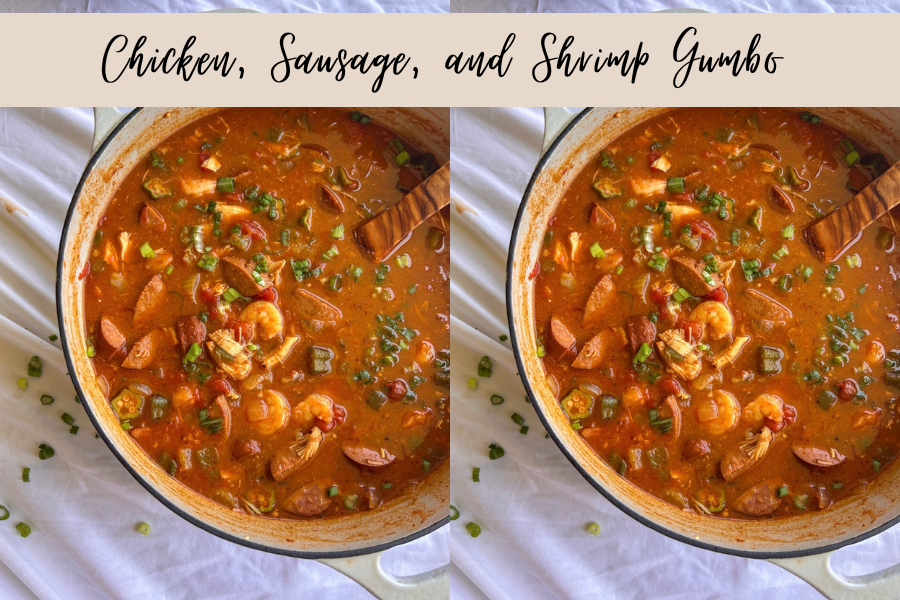
Gumbo isn’t your average quick one-pot meal. This Louisiana classic typically requires a bit more nurturing and time on the stove – especially when making the roux from scratch. A roux (a slow-cooked mix of fat and flour) forms the backbone of gumbo’s rich flavor, but it can take anywhere from 10 minutes for a light brown roux to up to an hour of constant stirring for a dark, chocolate-colored roux. The great news? In this recipe, we’re using a clever shortcut: a high-quality pre-made dark roux that cuts down the cooking time without sacrificing that deep, authentic flavor.
This recipe is considered a Creole-style gumbo because it uses a butter-and-flour roux and includes tomatoes. Traditionally, Cajun gumbo uses oil for the roux and never includes tomatoes, whereas Creole gumbo often contains tomatoes and sometimes okra. By adding tomatoes, we’re technically “breaking” one of the two unwritten Cajun rules of gumbo (more on those rules later), but it adds a lovely touch of acidity and complexity to the pot.
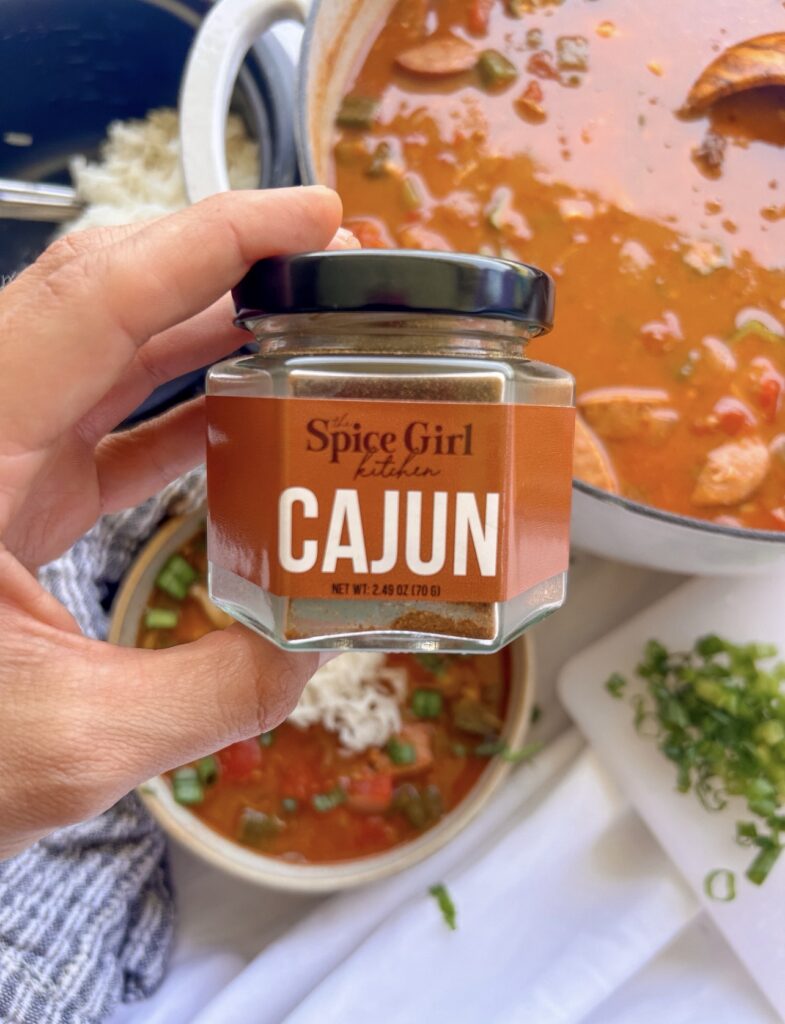
In this recipe, I use my salt-free cajun blend from my spice company – The Spice Girl Kitchen. I’m completely biased because it is, after all, my spice recipe and the best salt-free cajun seasoning on the market. But feel free to use whatever cajun blend you have on hand.
Why You’ll Love This Recipe
- Authentic Louisiana flavor. This gumbo is inspired by the Creole-style gumbo I grew up eating in New Orleans, complete with tomatoes, okra, and a rich, flavorful broth.
- Shortcut dark roux. Using a quality pre-made dark roux saves time without sacrificing that deep, classic gumbo flavor.
- Loaded with protein. Every bowl is packed with juicy chicken, smoky andouille sausage, and tender shrimp.
- Perfect for meal prep. Gumbo tastes even better the next day as the flavors continue to develop.
- Freezer friendly. Make a big batch now and enjoy homemade gumbo whenever the craving hits.
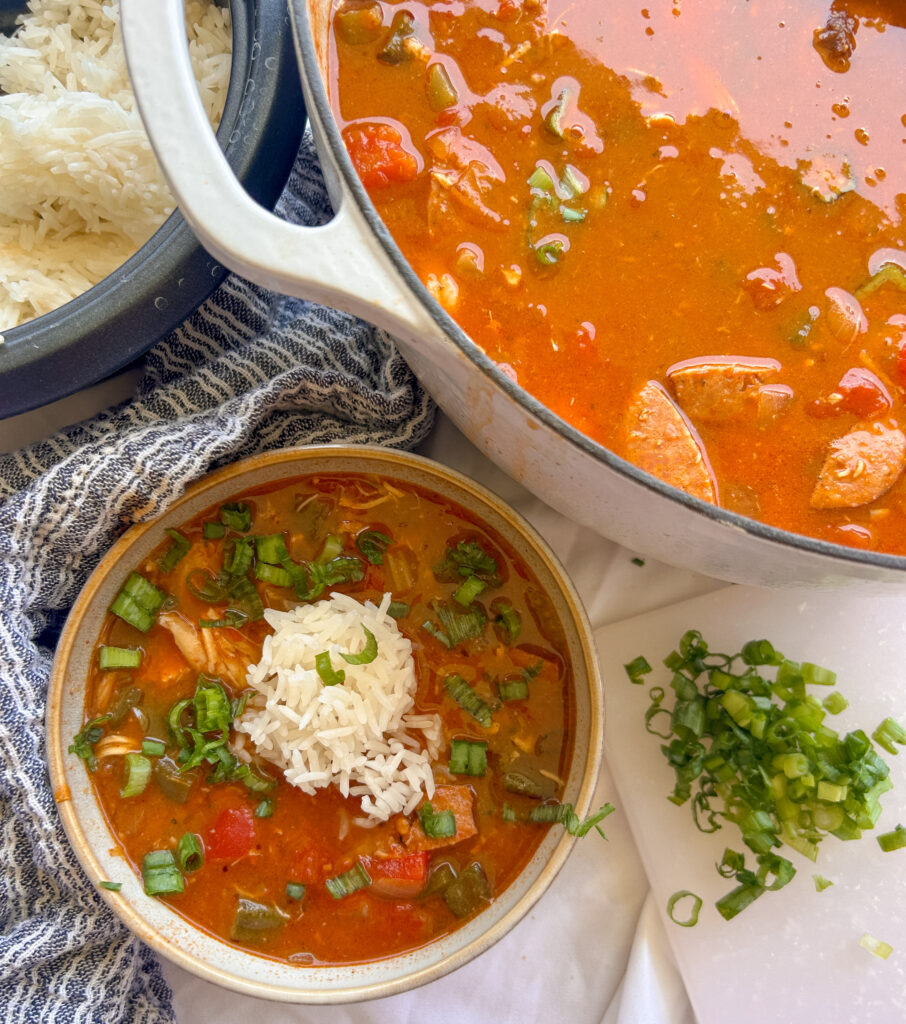
What Is Chicken Sausage Shrimp Gumbo?
Chicken Sausage Shrimp Gumbo is a Louisiana classic made with the Cajun “Holy Trinity” of onion, celery, and green bell pepper simmered in a rich, flavorful broth with chicken, andouille sausage, shrimp, and okra. It’s hearty, comforting, and traditionally served over fluffy white rice.
This recipe leans Creole-style because it includes tomatoes and okra. Instead of making a roux from scratch, we use a quality pre-made dark roux to save time while still creating the deep, rich flavor gumbo is known for. Like most Louisiana recipes, every family has their own way of making gumbo, and this is the version I grew up loving.
Mirepoix vs. The Holy Trinity (Cajun Flavor Base)
Mirepoix is a French flavor base. The Cajuns have their version called The Holy Trinity. The major difference lies in the ratio of ingredients and the great debate about carrots vs green bell peppers!
Mirepoix Formula
2 parts onions + 1 part carrots + 1 part celery
The Holy Trinity Formula
3 parts onions + 2 parts celery + 1 part green bell pepper
The Two Rules of Gumbo (and Why We Break Them)
Like any iconic dish, gumbo comes with a few unwritten rules passed down by Louisiana cooks. If you ask a Cajun chef, “What are the two golden rules of gumbo?”, you’ll likely hear this:
-
Never put tomatoes in gumbo.
-
Never use store-bought roux.
Traditional Cajun gumbo is a strictly tomato-free zone – tomatoes are seen as a Creole addition, not used in true Cajun versions. And as for roux, purists will insist you must make it yourself with flour and oil (or butter), standing over the stove and stirring patiently until it’s just right. A jarred roux from the store or a roux shortcut is almost considered cheating in the old-school Cajun world.
So are we breaking the rules? Yes – proudly! This Chicken, Sausage, and Shrimp Gumbo is Creole-inspired, so it does include tomatoes. (Thou shalt not add tomato is a Cajun rule we’re bending for the sake of flavor.) The tomatoes add a lovely acidity and slight sweetness that brighten up the stew. And guess what – many well-respected gumbo recipes use tomatoes, especially in New Orleans Creole cooking. It’s a matter of personal preference and regional style. Our philosophy: if it tastes amazing, it’s allowed!
Store Bought vs Homemade Roux
As for roux, we’re using a pre-made dark roux as a time-saving shortcut. I promise this doesn’t make your gumbo any less delicious. Making roux from scratch is an art form (and you absolutely can do it – see my Ultimate Guide to Making the Perfect Roux for tips), but there’s no shame in taking a little help on a busy day. A quality store-bought roux or roux base will give you that deep toasted flavor in a fraction of the time. Just be sure to get a dark roux for this recipe, since we want that rich flavor and mahogany color.
(For the record, the spirit behind those two rules is: 1) Cajun gumbo relies on roux and maybe okra/filé for thickening, not tomatoes; 2) a homemade roux gives better flavor and pride of craftsmanship. In this recipe we still get a deep, dark roux flavor, and we combine roux plus okra for thickening – so we’re respecting the intent of great gumbo, if not the letter of the law.)
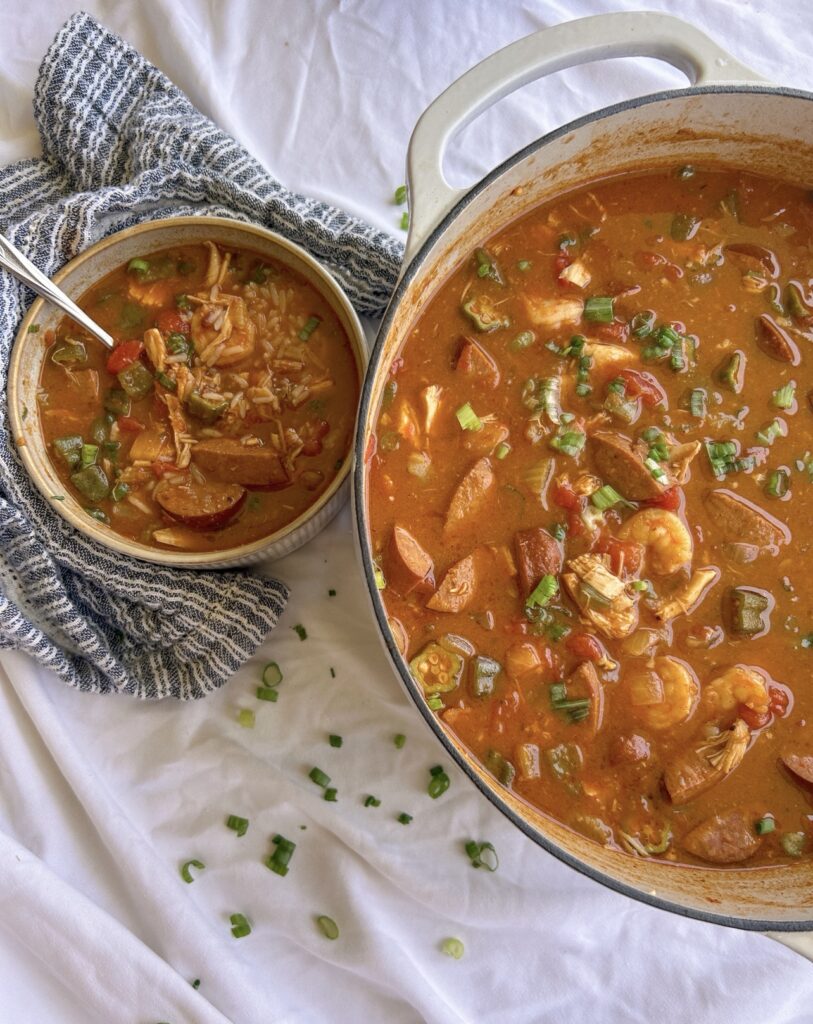
What Is Traditional Gumbo Made Of?
Before we jump into cooking, you might be wondering: what exactly is gumbo? Gumbo is a thick, flavorful stew that originated in Louisiana in the 18th century, often used as a symbol of the state’s melting pot of cultures. A traditional gumbo is made up of a few key components:
Stock or Broth
The liquid foundation of the stew (often chicken stock or seafood stock).
Roux
A cooked mixture of fat and flour used to thicken and flavor the gumbo. Roux can range in color from light blond to very dark brown, almost black. Learn how to make the perfect roux from scratch here. (Darker roux = richer, nuttier flavor but less thickening power.)
Holy Trinity
Onion, celery, and bell pepper – sautéed in the roux or cooking fat to build the flavor base. Often garlic is added too, for extra depth.
Meat or Seafood
Traditional gumbo usually includes some combination of proteins like chicken, andouille sausage, shrimp, crab, crawfish, or oysters. (Our recipe uses three: chicken, sausage, and shrimp for a super hearty gumbo.)
Okra or Filé Powder
Gumbo almost always features a thickener beyond the roux. Okra is a common choice (especially in Creole gumbo), as it cooks down and naturally thickens the stew. Filé powder (ground sassafras leaves) is another traditional thickener, typically stirred in at the end of cooking or sprinkled on each serving. Some gumbo recipes use one or the other, or even both. In this recipe, we use okra during cooking for thickness and texture.
Seasonings
Cajun or Creole seasoning (a blend of spices like paprika, garlic, black pepper, cayenne, oregano, etc.) is crucial for that signature flavor. We use our salt-free Cajun seasoning so we can control salt levels separately. Other additions include bay leaves, thyme, hot sauce or cayenne for heat, salt, pepper, and sometimes Worcestershire for umami. Gumbo is highly customizable to taste.
Served with Rice
Gumbo is traditionally served over a scoop of warm white rice in the bowl, making it a complete and filling meal. The rice soaks up that flavorful gravy. Gumbo is comfort food at its finest, especially on a cool day when you need a hearty, warm dish.
No two gumbos are exactly alike – there are endless variations – but the above elements are what make it gumbo.

My 5 Top Gumbo Tips
Decrease The Slime
-
Sautéing fresh okra before putting it in the gumbo helps get rid of that slimy layer that okra normally has. This was a game-changer for me! The other option to avoid the slimy texture is to use pre-cut frozen okra.
Light Vs Dark roux
-
This recipe uses a pre-made dark roux, which is our major shortcut! A light roux takes about 10 minutes, whereas a dark roux can take up to an hour. If you prefer a dark roux, one way to speed up the process is to toast the flour in a pan in the oven until it is a golden brown color! Or shorten the process even more by investing in a pre-made roux like me! If you want to make your own roux, be sure to check out my Ultimate Guide To Making Perfect Roux!
Don’t burn it!
-
Roux is known to burn easily! Keep a close eye on it. It’s no fun to start over. Keep the heat low and stir almost constantly. Once the roux is done, the rest is easy and relatively low maintenance! Again, for a full breakdown, check out my Ultimate Guide To Making Perfect Roux!
Shredded Chicken Short Cuts
-
For the shredded chicken, you can either cook chicken breasts (plain) and shred it yourself or use a pre-cooked chicken (like a rotisserie chicken!). I had some extra raw chicken breasts, so I boiled them for 15-18 minutes, drained the water, then used a hand mixer to get that perfect shred with minimal effort.
MISE EN PLACE
-
Mise en Place is a French culinary term that translates to “putting in place.” Take the time to prep, organize, and chop everything you need ahead of time. It helps with staying organized and having a stress-free experience in the kitchen!
How to Make Chicken Sausage Shrimp Gumbo
Sauté the vegetables
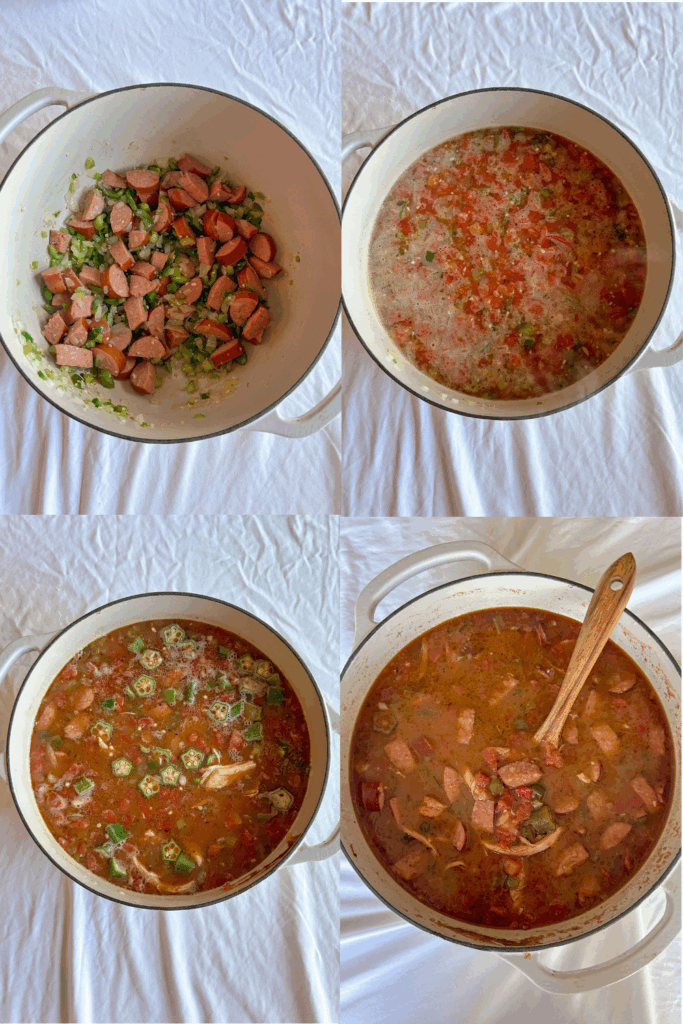
Melt the butter in a large heavy-bottom pot. Add the onion, celery, and green bell pepper, then cook until softened. Stir in the garlic and cook for another minute until fragrant.
Brown the sausage
Add the sliced andouille sausage and cook until lightly charred around the edges. This adds another layer of smoky flavor to the gumbo.
Build the broth
Stir in the diced tomatoes, chicken broth, Cajun Seasoning, and bay leaves. Bring everything to a boil, then reduce the heat and simmer for about 15 minutes.
Stir in the roux
Whisk the prepared dark roux into the simmering broth until completely dissolved. Continue simmering for another 5 minutes to thicken the gumbo.
Finish the gumbo
Add the shrimp, shredded chicken, and okra. Simmer just until the shrimp are pink and cooked through, about 5 minutes. Taste and season with salt as needed.
Serve
Remove the bay leaves and ladle the gumbo over cooked white rice. Garnish with sliced green onions and serve hot.
What to Serve with Gumbo
Gumbo is incredibly hearty and satisfying all on its own, but it’s traditionally served with a few simple sides or toppings that round out the meal. Here are some classic ways to serve gumbo and accompaniments that pair perfectly:
-
White Rice: Every good gumbo is served over rice and garnished with a little green onion or parsley.
-
French Bread, Cornbread, or Saltine Crackers
-
Potato Salad or Salad de Pommes: Here’s a quirky Southern tradition – in some parts of Louisiana, gumbo is enjoyed with a scoop of potato salad on the side (or even plopped right in the bowl!). The cool, creamy potato salad (often a mustardy one with eggs) is an awesome foil to the hot, spicy gumbo. It might sound odd if you haven’t tried it, but don’t knock it until you do – it’s delicious!
-
Deviled Eggs: Similarly, a plate of deviled eggs can be a fun appetizer or side with gumbo, especially for gatherings. They’re a popular party pairing in Cajun country when gumbo is on the menu.
-
Salad or Greens: To add something green to your meal, you can serve gumbo with a simple green salad or some cooked greens (like collard or mustard greens). A light cucumber & tomato salad or a tangy vinegar-based coleslaw also works well, since it cuts through the richness of the gumbo.
-
Cold Beer or Iced Tea
In our home, we usually keep it straightforward: gumbo, rice, and French bread, and maybe potato salad if we’re feeding a crowd. That combination never fails! Gumbo is a star all by itself, so you don’t need elaborate sides – just a few simple, soul-satisfying additions to make it a complete Cajun feast.
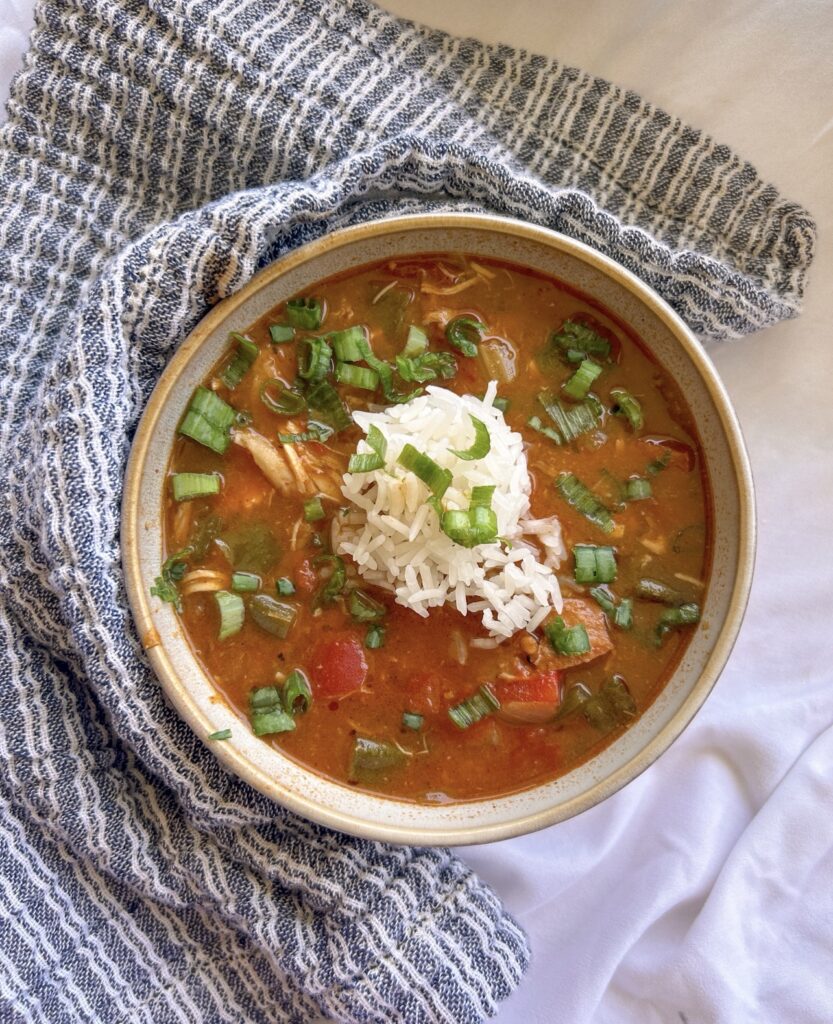
Storage and Reheating
One of the best things about gumbo (aside from eating it fresh) is that the leftovers taste even better the next day. The flavors continue to meld and deepen overnight. So don’t be afraid to make a big pot – gumbo keeps well! Here’s how to store and reheat your chicken, sausage, and shrimp gumbo for maximum enjoyment:
Refrigerator
Let the gumbo cool to near room temperature, then transfer it to an airtight container and store in the fridge. It will keep for about 3-4 days chilled (if it lasts that long without being devoured). In fact, many people swear gumbo is at its peak flavor on day 2. Before serving leftovers, you may notice a layer of solidified fat on top once it’s chilled – you can scrape that off if you like, or stir it back in when reheating for extra richness.
Freezer
Gumbo also freezes very well. Pour the cooled gumbo into freezer-safe containers or heavy-duty zip-top bags (I like to freeze individual portions for easy meals) and freeze for up to 3 months. Be sure to leave a little headspace if using containers, as the liquid will expand when frozen. Label with the date. For longer storage, the sooner you freeze it, the better the flavor will be preserved.
Thawing
When you’re ready to eat frozen gumbo, thaw it in the refrigerator overnight. (In a pinch, you can thaw the container in a bowl of cold water to speed it up, but fridge thawing is safest to maintain quality.)
Reheating
Reheat gumbo gently on the stovetop over medium-low heat. Place it in a pot, cover, and warm it, stirring occasionally, until it’s hot all the way through (steaming and maybe a low simmer). Avoid boiling it vigorously, as that can toughen the meats or turn shrimp rubbery – you just want to heat it until piping hot (at least 165°F if you want to be technical for food safety). If the gumbo has thickened up too much in the fridge, you can add a splash of water or stock to loosen it while warming. You can also reheat individual bowls in the microwave – cover and microwave in 1-minute bursts, stirring in between, until hot. Just be careful, it will heat unevenly and can splatter; stovetop is easier for large quantities. Once reheated, don’t re-freeze previously frozen gumbo, and try to finish refrigerated leftovers within a few days.
Pro Tip: Gumbo is a perfect make-ahead dish for parties or busy weeks. You can cook it a day (or even two) before and refrigerate it – the flavor will be incredible when you reheat it for your guests. Many gumbo aficionados purposely make their gumbo a day ahead because of this flavor-melding magic that happens. So feel free to plan ahead!
Frequently Asked Questions
What is traditional gumbo made of?
Traditional gumbo is made with a flavorful broth thickened by a roux and sometimes okra or filé powder. It starts with the Cajun “Holy Trinity” of onion, celery, and bell pepper, then adds proteins like chicken, andouille sausage, shrimp, crab, or oysters. While every family has their own recipe, these ingredients are the foundation of classic Louisiana gumbo.
Is this Cajun or Creole gumbo?
This recipe is closer to a Creole-style gumbo because it includes tomatoes. Traditional Cajun gumbo typically skips tomatoes and relies on a dark roux for its rich color and flavor. Both styles are authentic Louisiana classics, and every family has their own spin on the recipe.
Can I use homemade roux?
Absolutely! If you already have homemade dark roux on hand, use about ½ cup in place of the prepared roux. It adds incredible depth of flavor but requires more time to make.
Can I use frozen okra instead of fresh?
Yes! Frozen okra is a great substitute if fresh isn’t available. There’s no need to thaw it first. Simply stir it into the gumbo during the last few minutes of cooking along with the shrimp and chicken. It may release a little extra liquid, but it will still help thicken the gumbo and taste just as delicious.
Can I use rotisserie chicken?
Definitely. Rotisserie chicken is a great shortcut and works perfectly in this recipe. Simply shred it and stir it in with the shrimp during the final few minutes of cooking.
Can I substitute the meat or seafood?
Yes! This recipe is very flexible. You can swap the chicken for boneless chicken thighs, add lump crabmeat, crawfish tails, or oysters, or use extra shrimp. Andouille sausage provides the most authentic flavor, but any smoked sausage can be substituted if needed.
How do I thicken gumbo?
Gumbo is traditionally thickened with roux, okra, filé powder, or a combination of the three. If your gumbo seems too thin, let it simmer uncovered for a little longer or stir in a bit more prepared roux. If it becomes too thick, simply add a splash of chicken broth until it reaches your preferred consistency.
Can I freeze gumbo?
Yes! Let the gumbo cool completely before transferring it to freezer-safe containers. Freeze for up to 3 months and thaw overnight in the refrigerator before reheating.
Can I make gumbo ahead of time?
Absolutely. Gumbo is one of those recipes that tastes even better the next day as the flavors continue to meld together, making it perfect for meal prep or entertaining.
More Louisiana-Inspired Recipes
If you love this Gumbo recipe, be sure to try some of my other Louisiana favorites:
Whether you make an all-seafood gumbo, a game meat gumbo (like duck or venison, very Cajun!), or stick to chicken and sausage, the method is the same. It’s said that in Louisiana, every family has their own gumbo recipe – so consider this one a base template and make it your own.
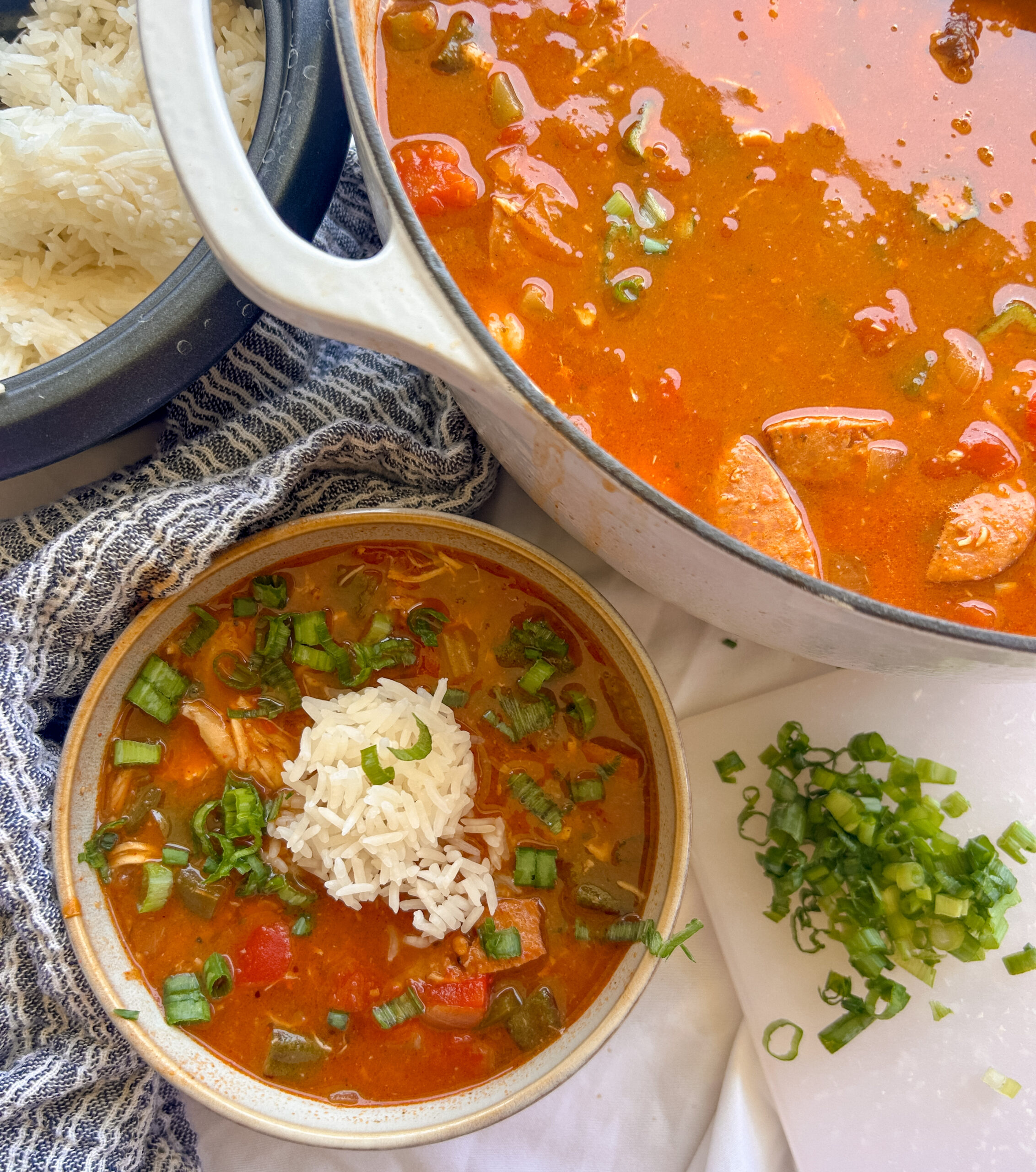
Chicken Sausage Shrimp Gumbo
Ingredients
Equipment
Method
- In a large heavy-bottom pot, melt the butter, add in the onion, celery, and green bell pepper, and stir until soft (about 5 minutes). Add garlic and cook for 1 additional minute.
- Add the sausage to the pot and char (about 5 minutes). Add in diced tomatoes, chicken broth, cajun seasoning, and bay leaves. Stir together.
- Increase heat to high and bring to a boil. Once boiling, reduce to a simmer and simmer for 15 minutes, stirring occasionally. Add in the pre-made roux, stir, and let simmer for 5 minutes.
- Add raw shrimp, shredded chicken, and okra. Return to a simmer. Cook for 5 minutes or until shrimp are opaque. Salt to taste. Serve with rice and garnish with green onions. Enjoy!
Video
Notes
- Make the Roux: A dark roux is the foundation of authentic gumbo. Stir constantly and keep the heat low to avoid burning. For shortcuts, use a quality pre-made roux or check out my Ultimate Guide to Making Roux.
- Okra or Filé Powder: Okra naturally thickens gumbo and adds flavor, but you can also stir in a pinch of filé powder at the end for authentic Cajun flair.
- Proteins: This recipe uses chicken, sausage, and shrimp, but you can swap shrimp for crab, crawfish, or oysters for a seafood gumbo. If you don’t eat shellfish, stick with chicken and sausage.
- Mise en Place: Prep and chop everything before you start cooking—gumbo moves fast once the roux is ready.
- Serving: Always serve gumbo over white rice. Traditional sides include French bread, potato salad, or coleslaw. *see the body of the blog for even more serving ideas
- Nutrition (per serving, 10 servings): Approximately 335 calories, 16g fat, 13g carbs, 34g protein, and 3g fiber. Nutrition information is an estimate. Actual values may vary based on specific ingredients and brands used.
- Store leftovers in the refrigerator for 3–4 days; the flavor actually gets better overnight.
- Freeze gumbo in airtight containers for up to 3 months. Thaw in the fridge overnight and reheat gently on the stove, adding a splash of stock if it’s too thick.
- Too Thin? Simmer uncovered to reduce, add a bit more roux, or stir in filé powder at the end.
- Too Thick? Stir in a splash of chicken stock or water to loosen it.
This post was all about Chicken, Sausage, and Shrimp Gumbo with Okra!
Did you make this recipe? Make sure to tag me @thespicegirlkitchen_ on Instagram or @thespicegirlkitchen on TikTok! I love seeing your recreations! I will be your ultimate hype woman!
Want to learn more about Kelsey? Click here to read her story!

This chicken sausage shrimp gumbo looks delicious. The combination of andouille sausage and fresh shrimp sounds like the ultimate comfort food!
Thank you for sharing such a detailed guide, the tips on how to freeze and reheat it are going to be helpful for meal prepping.