The anatomy of a knife explains how each part of a kitchen knife works together for better control, precision, and safety. Understanding knife parts like the blade, tang, and bolster helps you cook more efficiently and choose the right knife for your kitchen.
This post contains affiliate links, which means I’ll receive a commission if you purchase through my link, at no extra cost to you. Please read the full disclosure here.
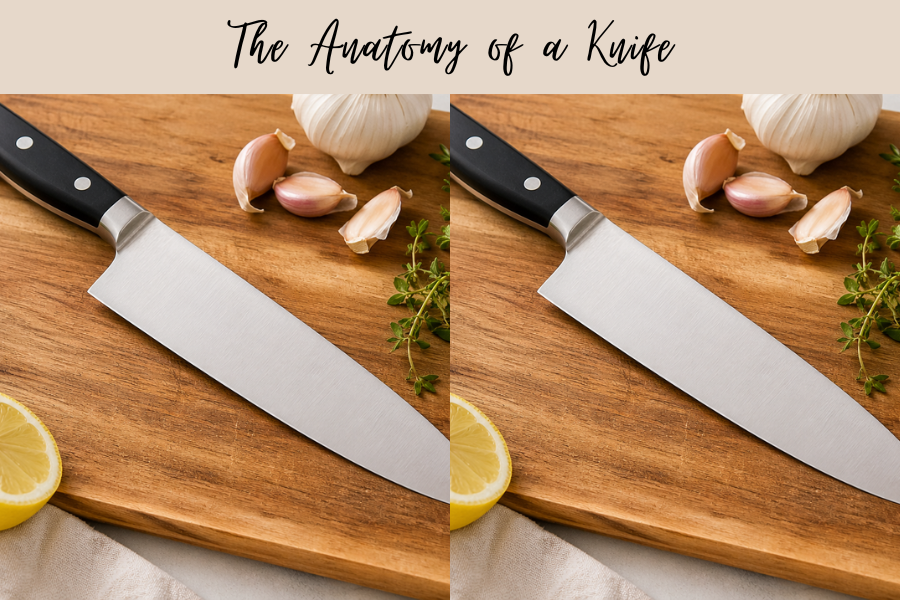
A good knife is one of the most important tools in the kitchen. Whether you are chopping vegetables, slicing bread, breaking down meat, or mincing herbs, the design of the knife affects how safe, comfortable, and efficient you feel while cooking.
As a dietitian, private chef, and recipe developer, I use knives every single day. You do not need a giant knife block full of specialty knives to cook well, but you do need to understand the basic parts of a knife and what they actually do.
What Is the Anatomy of a Knife?
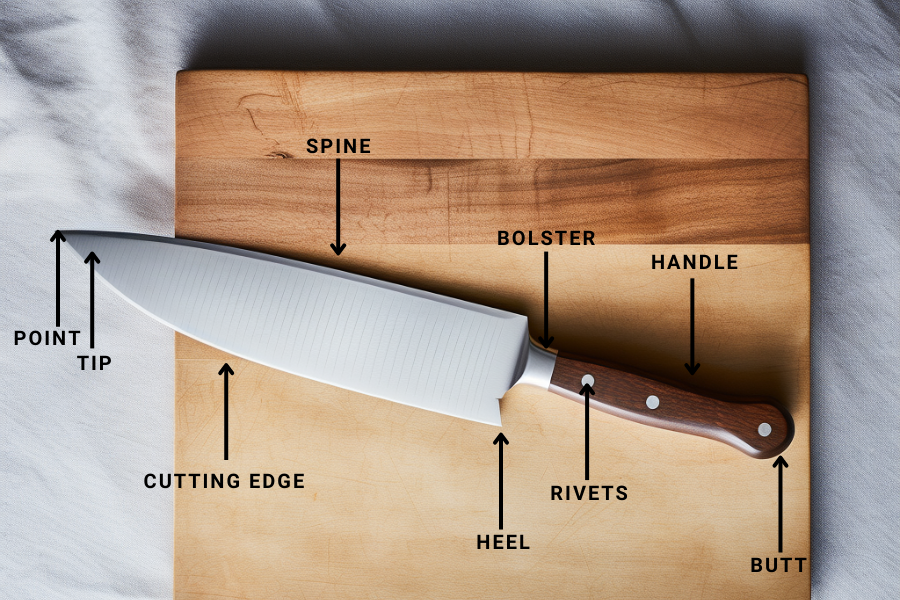
The anatomy of a knife refers to all the main parts that make up a knife, including the blade, tip, edge, spine, tang, handle, and bolster.
Each part serves a specific purpose. Some parts help with cutting, some improve balance, and others affect comfort, safety, and durability.
Parts of a Kitchen Knife
Blade
The blade is the main cutting portion of the knife. It includes the sharp edge, tip, heel, and spine.
Most kitchen knife blades are made from stainless steel, carbon steel, or high-carbon stainless steel. Stainless steel is popular because it resists rust and is easy to maintain, while carbon steel can hold a very sharp edge but requires more care.
Cutting Edge
The cutting edge is the sharpened side of the blade. This is the part that makes direct contact with your food.
A smooth edge works well for slicing, chopping, and dicing. A serrated edge works better for foods with a tough outside and soft inside, like bread or tomatoes.
Tip
The tip is the pointed end of the knife. It helps with detail work, small cuts, and piercing food.
You use the tip when trimming, scoring, or making precise cuts. A sharper, thinner tip gives you more control for delicate tasks.
Spine
The spine is the top, unsharpened edge of the blade.
A thicker spine usually gives the knife more strength and stability. A thinner spine can make the knife feel lighter and better for precise slicing.
Heel
The heel is the back portion of the blade closest to the handle.
This part of the knife gives you power. Use the heel when cutting through firmer foods like carrots, potatoes, winter squash, or thicker pieces of meat.
Tang
The tang is the part of the blade that extends into the handle.
A full tang runs through the entire handle and usually gives the knife better strength, balance, and durability. A partial tang only extends partway into the handle and may feel lighter, but it is often less sturdy.
If you are buying one good chef’s knife, I recommend looking for a full tang knife.
Handle
The handle is the part you grip while cutting.
A good handle should feel comfortable, secure, and balanced in your hand. Handles can be made from wood, plastic, composite materials, or metal.
The best handle is not always the prettiest one. It should feel safe and natural when you hold it.
Bolster
The bolster is the thicker area where the blade meets the handle.
Not every knife has a bolster, but when it does, it can add balance and help protect your fingers. A full bolster can feel sturdy, while a smaller or partial bolster can make sharpening easier.
Why Knife Anatomy Matters
Understanding the anatomy of a knife helps you cook with better control.
When you know what each part does, you can use the right area of the knife for the right task. The tip helps with precision, the heel gives power, and the edge handles most everyday cutting.
Knife anatomy also matters when you are shopping for a knife. A comfortable handle, balanced weight, sharp edge, and strong tang can make a huge difference in how the knife feels during daily cooking.
How to Choose a Good Kitchen Knife
You do not need every knife on the market. Most home cooks can do a lot with a few quality knives.
When choosing a kitchen knife, look for these features:
Comfortable Handle
Hold the knife before buying it if possible. The handle should feel secure and comfortable, not slippery or awkward.
Balanced Weight
A good knife should not feel too blade-heavy or too handle-heavy. It should feel balanced when you hold it.
Full Tang
A full tang knife is usually stronger and more durable. This is especially helpful for a chef’s knife you plan to use often.
Sharp, Durable Blade
Choose a knife that can hold a sharp edge and handle regular use. A sharp knife is actually safer than a dull one because it requires less force.
Common Types of Kitchen Knives
Chef’s Knife
A chef’s knife is the most versatile kitchen knife. Use it for chopping, slicing, dicing, and mincing.
If you only buy one quality knife, make it a chef’s knife.
Click here to shop my favorite chef’s knife!
Paring Knife
A paring knife is small and easy to control. Use it for peeling, trimming, coring, and small detail work.
Click here to shop my favorite pairing knife!
Bread Knife
A bread knife has a serrated edge that slices through crusty bread without smashing the soft inside.
It also works well for tomatoes, cakes, and delicate baked goods.
Click here to shop my favorite bread knife!
Santoku Knife
A santoku knife is a Japanese-style multipurpose knife. It works well for slicing, dicing, and chopping.
It usually has a shorter, wider blade than a traditional chef’s knife.
Click here to shop my favorite Santoku knife!
Utility Knife
A utility knife is smaller than a chef’s knife but larger than a paring knife.
It is useful for quick everyday tasks like slicing sandwiches, cutting fruit, or trimming smaller pieces of meat.
Click here to shop my favorite utility knife!
Boning Knife
A boning knife has a narrow blade designed to separate meat from bone.
It is helpful for trimming chicken, deboning meat, and working around joints.
Click here to shop my favorite boning knife!
Cleaver
A cleaver is a heavy-duty knife with a thick, broad blade.
It is best for tougher jobs like cutting through bones or large pieces of meat.
Click here to shop my favorite cleaver!
Fillet Knife
A fillet knife has a thin, flexible blade designed for fish.
The flexibility helps you make clean, precise cuts along the skin and bones.
Click here to shop my favorite fillet knife!
Steak Knife
A steak knife is used at the table for cutting cooked meats.
Some have serrated edges, while others have straight edges.
Click here to shop my favorite steak knives!
How to Sharpen a Kitchen Knife
A sharp knife makes cooking safer, easier, and more enjoyable.
There are several ways to sharpen a knife, but a whetstone gives you the most control once you learn the technique.
What you need
- Sharpening stone (whetstone), preferably with coarse and fine grits. Click here to shop what I use.
- Towel or non-slip mat to stabilize the stone.
- Honing rod (optional for maintaining the edge between sharpening sessions).
- Clean towel for drying.
Inspect the Blade
Look for chips, nicks, or dull areas before sharpening.
If the knife is badly damaged, you may need a coarse grit stone or professional sharpening.
Soak the Stone
If you are using a water stone, soak it according to the manufacturer’s directions.
Some stones do not need soaking, so always check the instructions for your specific sharpener.
Secure the Stone
Place the stone on a towel or non-slip mat.
This keeps it stable while you sharpen and helps prevent accidents.
Choose the Correct Angle
Most kitchen knives sharpen best around a 15 to 20 degree angle.
Try to match the knife’s existing bevel instead of forcing a new angle.
sharpen each side
Hold the knife at a consistent angle and move the blade across the stone in smooth, controlled strokes.
Repeat on both sides of the blade until the edge feels even and sharp.
finish with a Finer Grit
Use the finer side of the stone to refine the edge.
This step helps create a smoother, sharper finish.
HONE WITH A ROD
A honing rod does not truly sharpen the knife. It realigns the edge between sharpening sessions.
Use it regularly to help maintain your knife’s edge.
clean and dry the knife
After sharpening, wash and dry the knife carefully.
Store it in a knife block, magnetic strip, sheath, or drawer organizer to protect the blade.
Knife Safety Tips
A sharp knife is safer than a dull knife, but only when you use it properly.
Always cut on a stable cutting board, keep your fingers tucked back, and avoid rushing. Use the right knife for the job, and never try to catch a falling knife.
FAQs About the Anatomy of a Knife
What are the main parts of a knife?
The main parts of a kitchen knife are the blade, edge, tip, spine, heel, tang, handle, and bolster.
What is the most important part of a knife?
The blade is the most important part because it does the cutting, but the handle and tang also matter because they affect comfort, safety, and control.
What does full tang mean?
Full tang means the metal from the blade extends through the entire handle. This usually makes the knife stronger, more balanced, and more durable.
Why is the bolster important?
The bolster adds balance and can help protect your fingers where the blade meets the handle. Some knives have a full bolster, partial bolster, or no bolster at all.
What knife should every beginner have?
Every beginner should start with a good chef’s knife, a paring knife, and a bread knife. Those three knives can handle most everyday kitchen tasks.
You May Also Like
If you liked this post, you may also be interested in our other kitchen tip posts.
- 5 Quick Tips for How to Organize Your Kitchen
- 11 Meal Prep Tips For A Stress-Free Week
- 11 Meal Prep Essentials
- 13 Genious Amazon Fridge Organization Ideas
OR click here for the entire “in the kitchen” category!
This post was all about The Anatomy of A Knife.
Did you try these tips? Make sure to tag me @thespicegirlkitchen_ on Instagram or @thespicegirlkitchen on TikTok! I love seeing you CRUSH IT! I will be your ultimate hype woman!
Want to learn more about Kelsey? Click here to read her story!