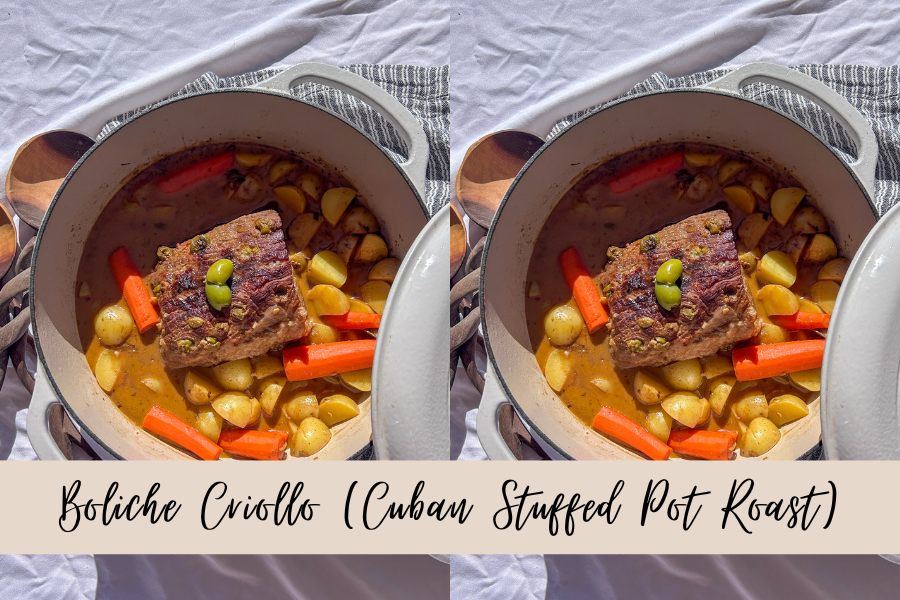
There are certain dishes that take time, patience, and care, and reward you for every minute spent. Boliche criollo is one of them.
This traditional Cuban pot roast is slow-cooked until fork-tender, infused with citrus, garlic, and aromatics, and finished with a rich, savory sauce that feels both comforting and celebratory. It is the kind of meal meant for Sundays, family gatherings, and plates passed around the table.
If you are looking to make authentic boliche at home, this recipe walks you through the classic method step by step.
In this recipe, I use my salt-free Cuban spice blend from my spice company – The Spice Girl Kitchen. I’m completely biased because it is, after all, my spice recipe and the best salt-free Cuban seasoning on the market. But feel free to substitute it (see recipe for specifics)! (P.S. My Cuban blend has some dried orange peel in it – along with other savory spices to help bring this dish to life)
Why You’ll Love This Recipe
- This is a truly traditional Cuban preparation, not a shortcut version.
- The beef is stuffed, not sliced or shredded, which gives the dish its signature look and flavor.
- The citrus-garlic braising liquid creates deep flavor without heaviness.
- It is a special-occasion dish that uses simple, accessible ingredients.
- Leftovers slice beautifully and taste even better the next day.
What Is Boliche?
Boliche is a traditional Cuban stuffed pot roast made from a whole cut of beef that is pierced, filled, and slowly braised until tender. The defining feature of boliche is the stuffing. The roast is filled with cured meat, garlic, and olives before being cooked low and slow in a citrus-based sauce.
You may see the dish referred to as boliche criollo or boliche cubano. These terms are used interchangeably and describe the same classic Cuban preparation.
What Part of the Cow Is Boliche?
Boliche is not a specific cut of meat. In Cuban cooking, the dish is most commonly made with an eye of round beef roast. This cut is lean, uniform in shape, and ideal for stuffing. Because eye of round is naturally firm, it requires slow cooking to become tender. When prepared properly, it slices cleanly and holds the stuffing beautifully.
What Is Boliche in English?
In English, boliche is best described as a Cuban stuffed pot roast.
There is no exact English translation because the technique is specific to Cuban cooking. While it shares similarities with pot roast, boliche is distinct in both preparation and flavor due to the stuffing and citrus-forward sauce.
The Origins of Boliche Criollo
Boliche has its roots in Spanish colonial cooking and evolved in Cuba using local ingredients and traditions. The term “criollo” refers to a traditional, local style of cooking that reflects Cuban culture and flavors. Citrus, garlic, onions, olives, and slow braising are all hallmarks of this cuisine. Today, boliche remains a beloved comfort food and is often served at family gatherings, holidays, and special occasions.
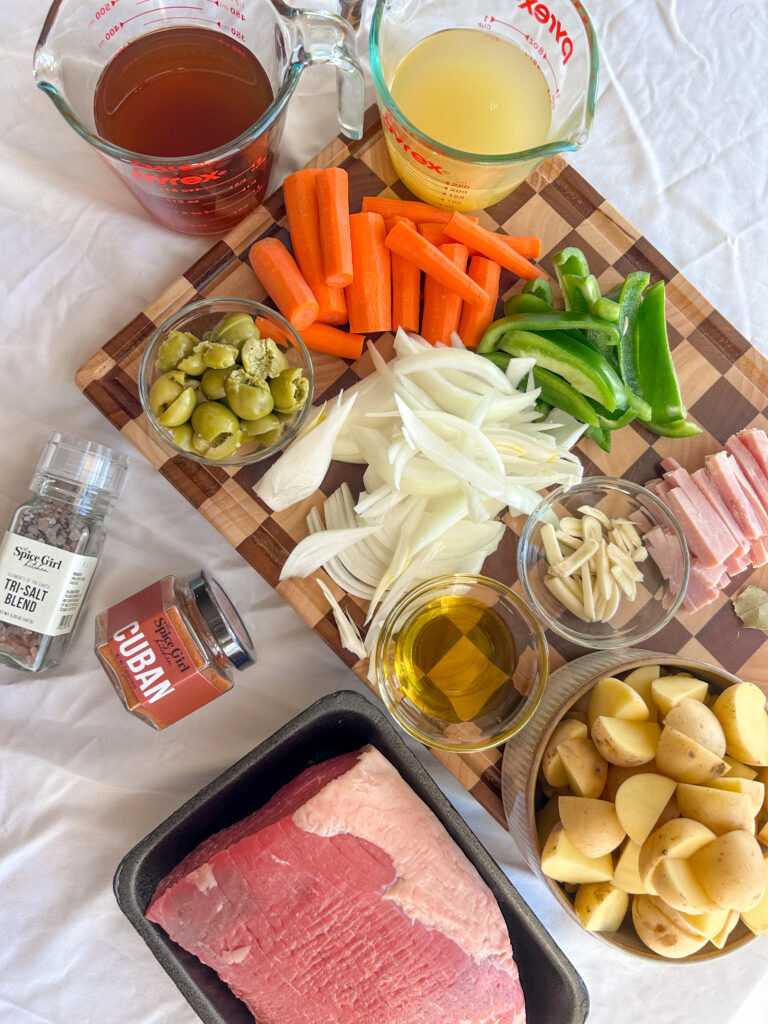
Ingredients You’ll Need
Stuffed Beef
-
Cured Spanish chorizo or cured ham
-
Garlic cloves
Braising Sauce
-
Yellow onion
-
Green bell pepper
-
Grated garlic
-
Sour orange juice (or orange juice plus lime juice)
-
Dry white wine
Optional Vegetables
-
Yukon Gold or white potatoes
-
Carrots
How to Make Boliche Criollo
Stuff the Roast
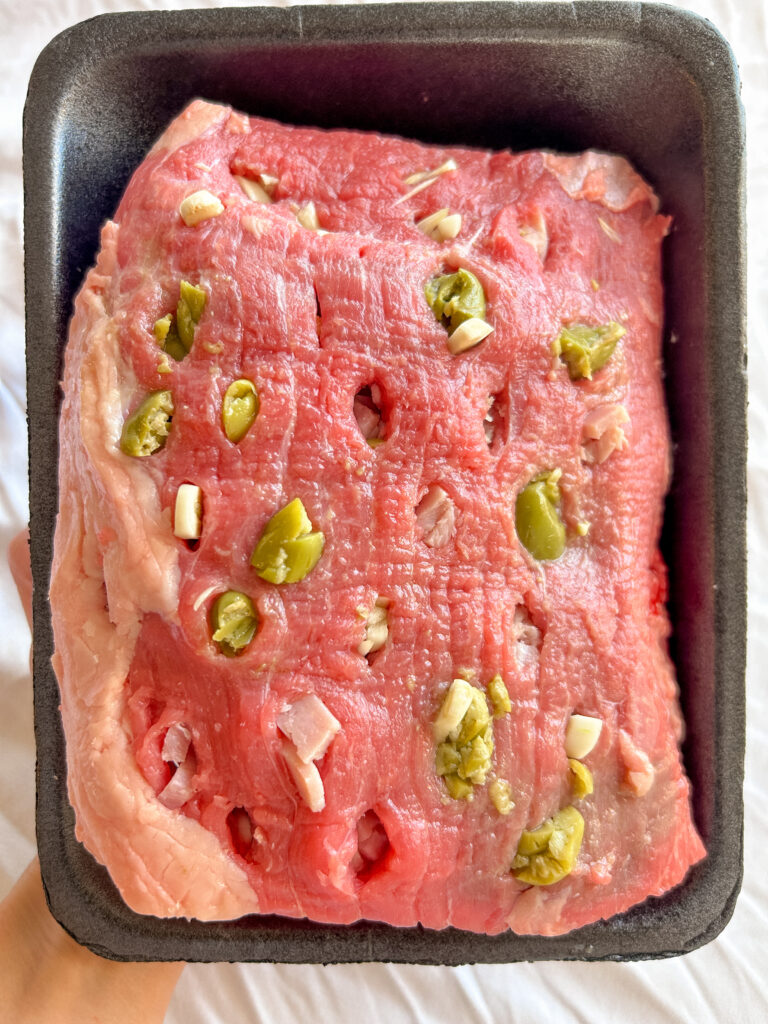
Pierce deep holes lengthwise throughout the beef roast. Fill each opening with cured meat, garlic, and olives, pressing the stuffing deep into the meat.
Optional but recommended: Tie the roast securely with kitchen twine so it holds its shape during cooking. If the roast is very uniform and tightly stuffed, you can skip this step.
Sear for Flavor
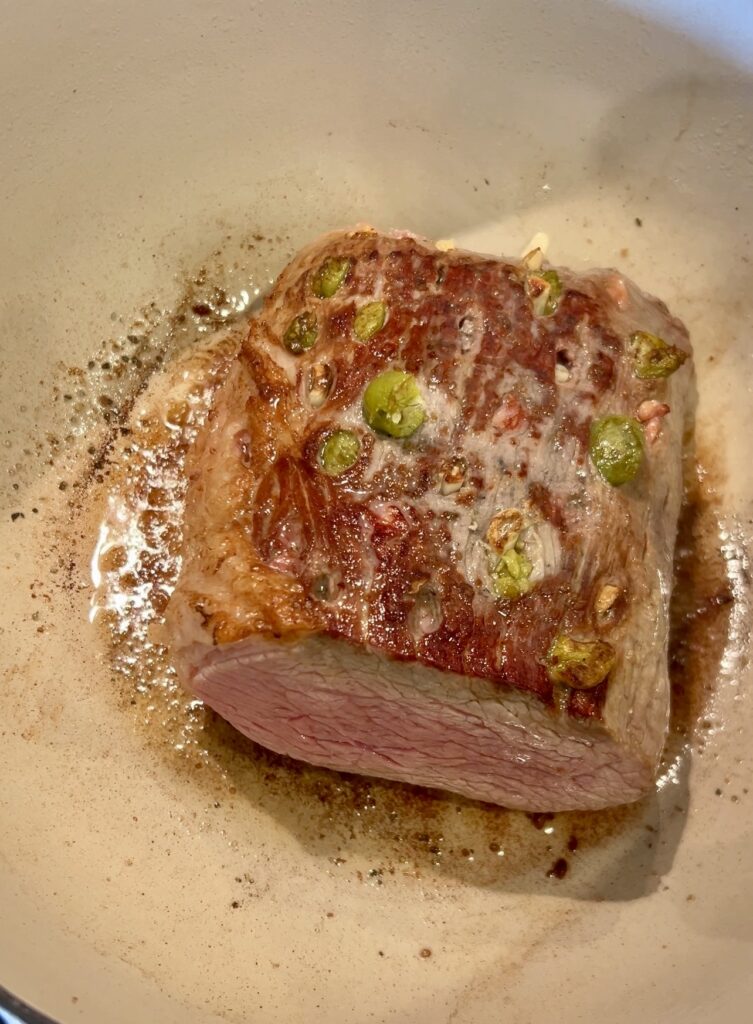
Brown the roast on all sides in olive oil until deeply golden. This step builds flavor and creates the foundation for the sauce.
Build the Braising Sauce
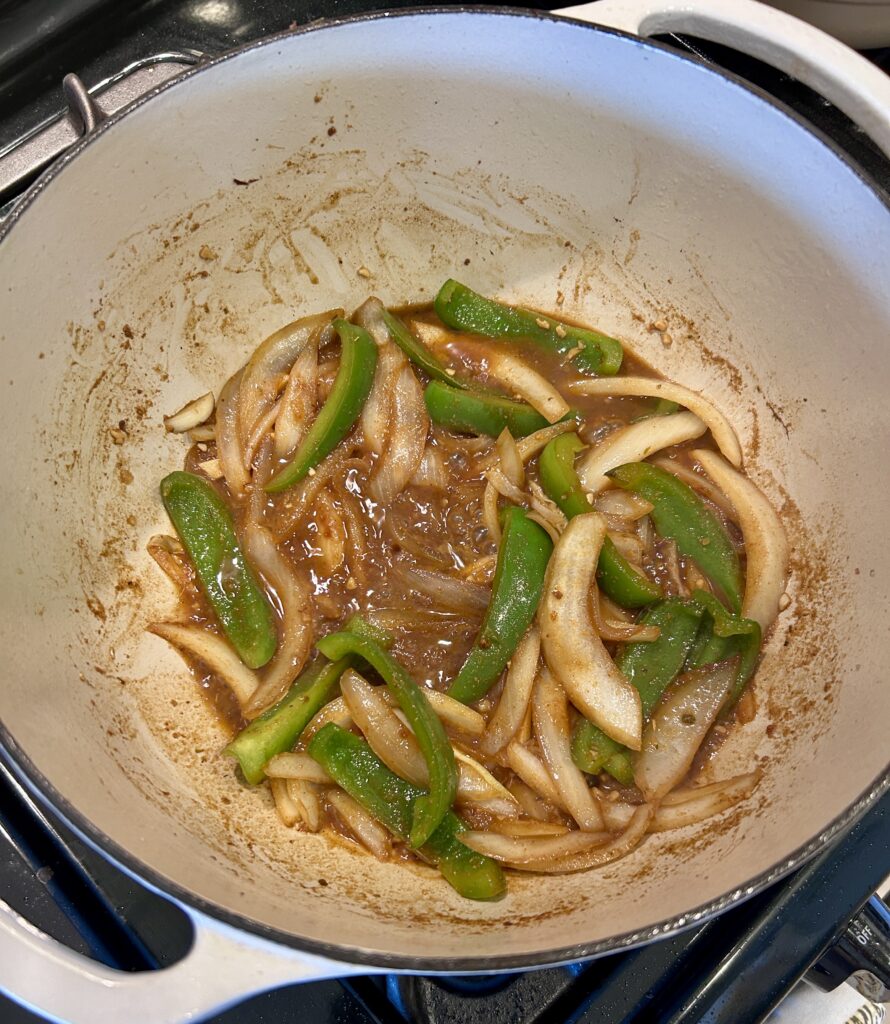
Cook onion and green bell pepper until softened. Add garlic, Cuban seasoning, salt, and bay leaves, then deglaze the pot with white wine.
Slow Braise Until Tender
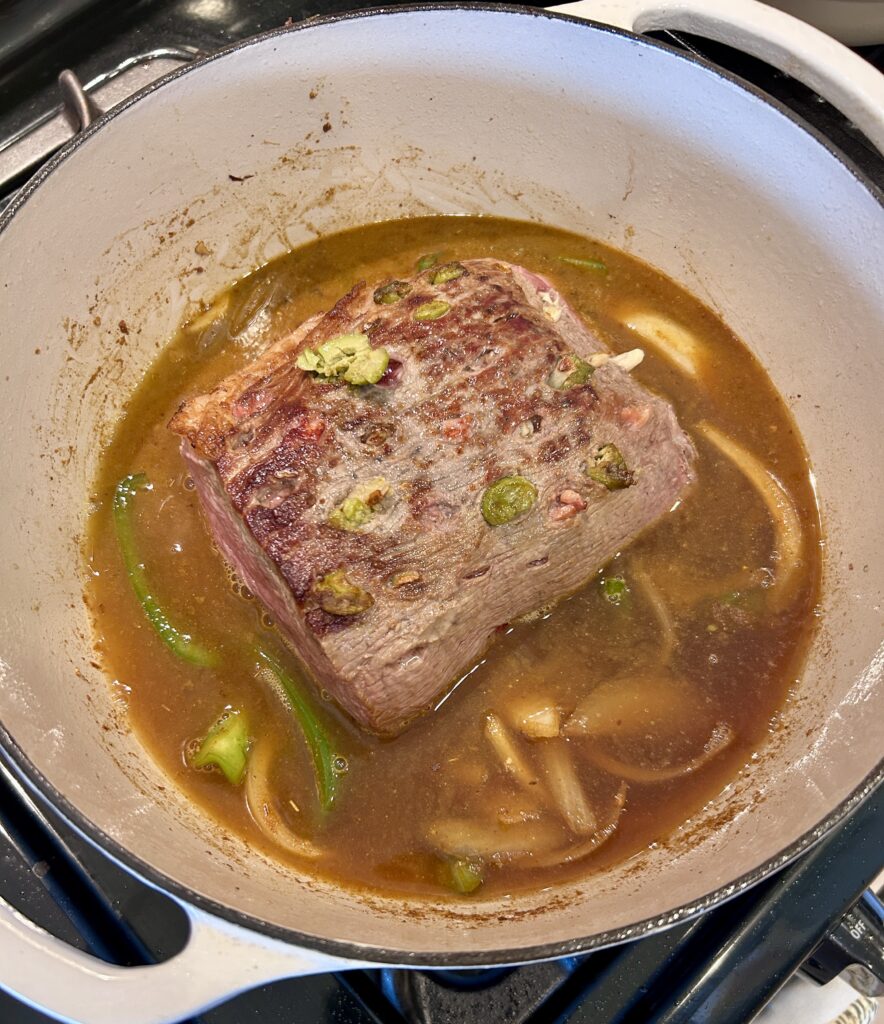
Return the roast to the pot and add citrus juice and beef broth. Cover and cook gently until the beef is fork-tender, turning occasionally for even cooking.
Add Vegetables if Using
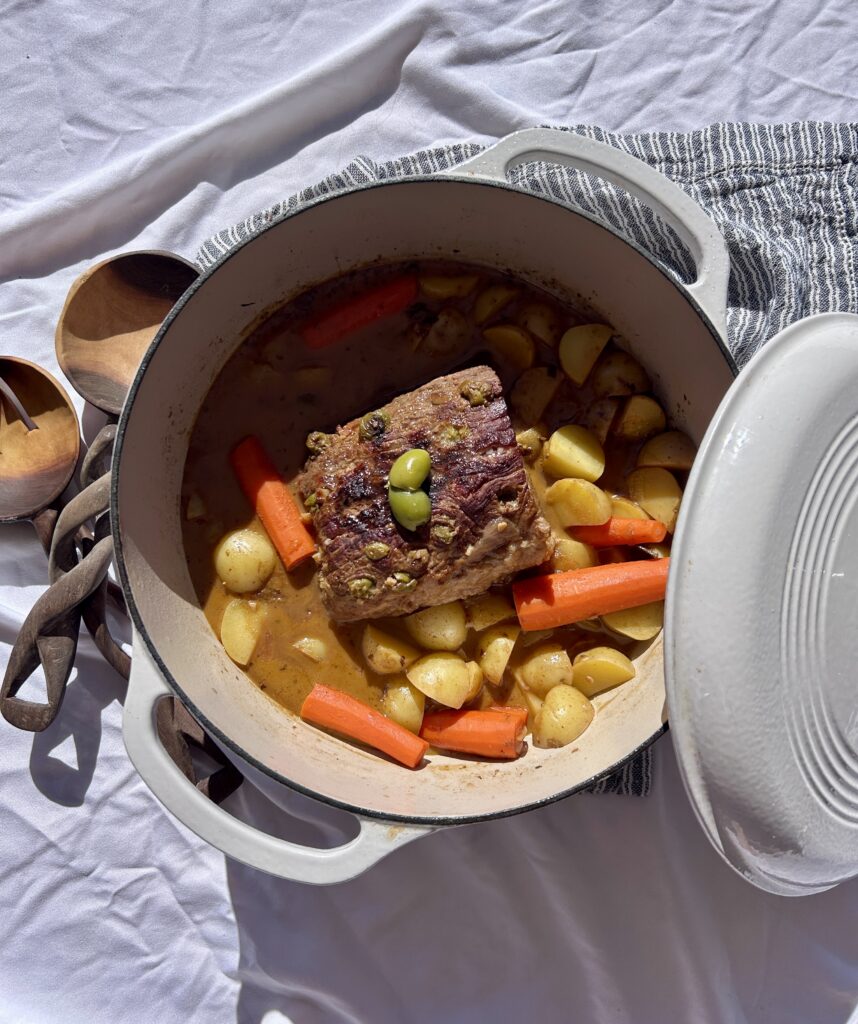
Potatoes and carrots can be added during the final 45 minutes so they absorb the sauce without overcooking.
How to Slice and Serve Boliche
- Let the roast rest before slicing to retain moisture.
- Remove the twine and slice against the grain into thick, even pieces.
- Serve with sauce spooned over the top and vegetables alongside.
What to Serve with Boliche Criollo
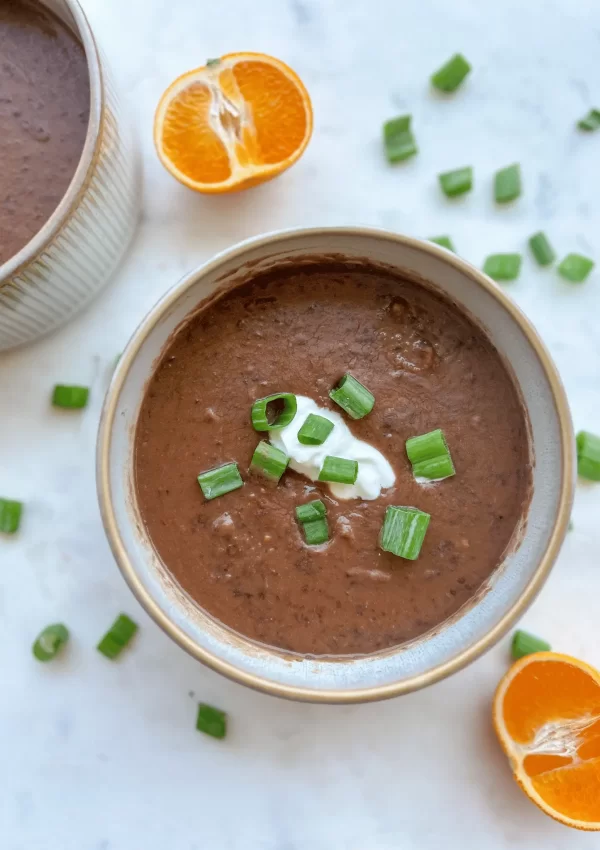
- Boliche is traditionally served with white rice and Cuban black beans.
- Fried sweet plantains or tostones are classic accompaniments.
- A simple avocado salad or citrusy slaw balances the richness of the dish.
Frequently Asked Questions
What is boliche criollo?
Boliche criollo is a traditional Cuban stuffed pot roast made with eye of round beef, cured meat, garlic, and olives, slow-cooked in a citrus-based sauce.
What is boliche Cuban?
Boliche cubano refers to the same dish as boliche criollo. The terms are used interchangeably to describe this classic Cuban recipe.
What is a boliche cut of meat in English?
Boliche is not a cut of meat. It refers to the dish itself, which is most commonly made using eye of round beef.
What does boliche mean in Argentina?
In Argentina, the word boliche typically refers to a nightclub or bar. It does not describe a food dish.
What is picadillo cubano?
Picadillo cubano is a separate Cuban dish made with ground beef, tomatoes, olives, and spices. It is not related to boliche and uses a completely different preparation.
Make-Ahead, Storage, and Reheating Tips
- Boliche tastes even better the next day as the flavors deepen.
- Store sliced beef with sauce to prevent drying out.
- Reheat gently on the stovetop or in the oven with a splash of broth if needed.
You May Also Like
If you enjoy this recipe, check out some of my other Cuban-style recipes like:
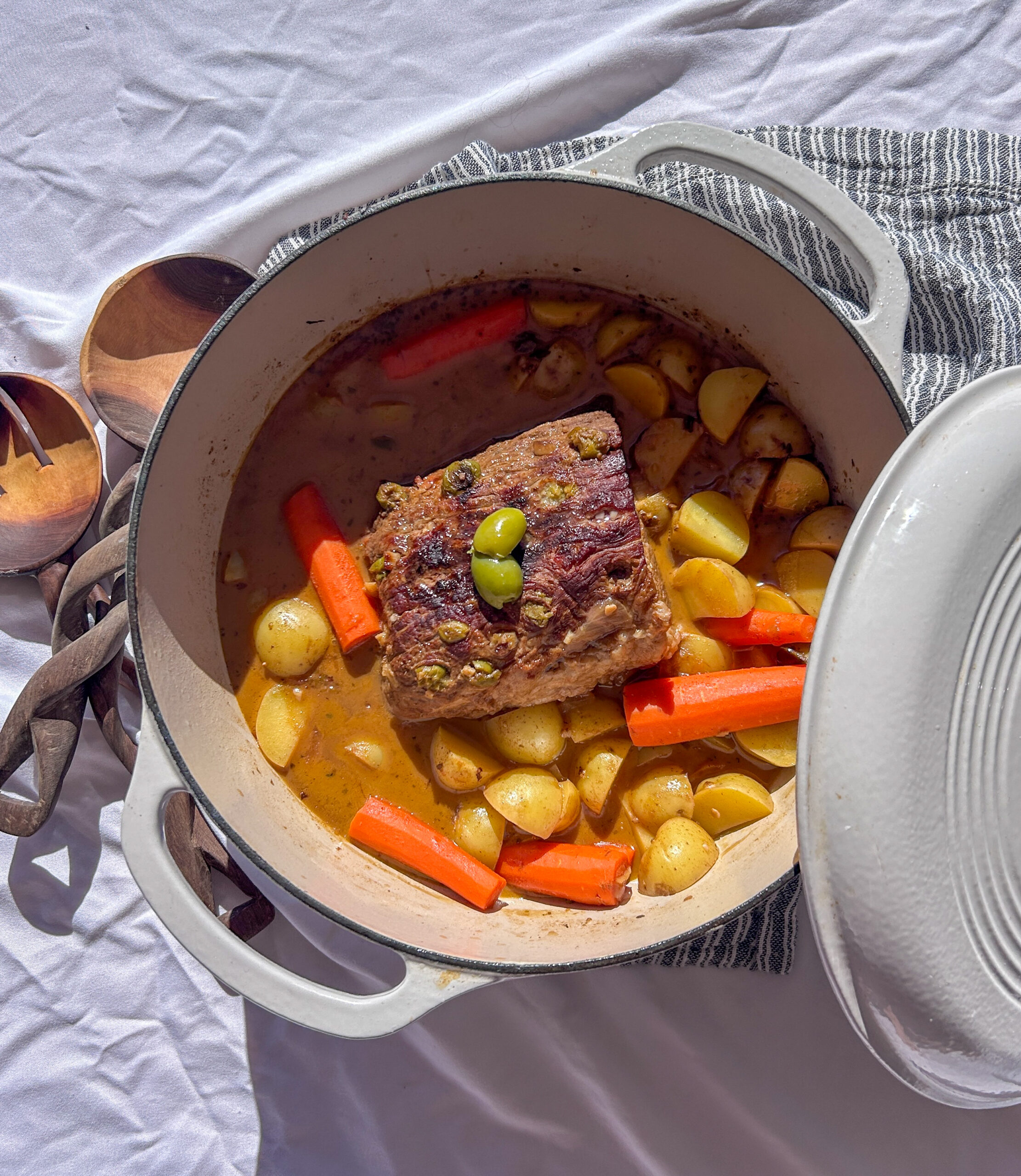
Boliche Criollo (Traditional Cuban Stuffed Pot Roast)
Ingredients
Equipment
Method
- Using a sharp knife, pierce deep holes lengthwise throughout the eye of round roast.
- Stuff each opening with chorizo or ham strips, garlic slivers, and olive halves, pressing them deep into the meat.
- Optional but recommended: Tie the roast securely with kitchen twine to maintain its shape during cooking. If the roast is very uniform and tightly stuffed, you can skip this step.
- Heat olive oil in a large Dutch oven over medium-high heat.
- Lightly season the outside of the roast with salt.
- Sear the roast on all sides until deeply browned, about 3 to 4 minutes per side. Remove and set aside.
- In the same pot, add sliced onion and bell pepper. Cook for 5 to 7 minutes until softened.
- Add grated garlic, Cuban Seasoning, salt, and bay leaves. Stir and cook for 30 seconds until fragrant.
- Deglaze with white wine, scraping up all browned bits from the bottom of the pot.
- Return the roast to the pot. Add sour orange juice and beef broth. The liquid should reach about halfway up the roast.
- Bring to a gentle simmer, cover, and reduce heat to low.
- Cook for 2 to 2.5 hours, turning the roast every 30 minutes, until fork-tender.
- During the final 45 minutes of cooking, add potatoes and carrots to the pot, nestling them into the sauce.
- Remove the roast and let it rest for 15 minutes.
- Remove twine and slice against the grain.
- Spoon sauce and vegetables over the sliced boliche to serve.
Video
Notes
- This dish tastes even better the next day and reheats beautifully.
- Eye of round is a lean cut and needs low, slow cooking to become tender.
- If the sauce reduces too much, add additional broth in 1/4 cup increments.
- Serve traditionally with white rice, Cuban black beans, and plantains.
- Nutrition (per serving, 8 servings): 410 calories, 18g fat, 10g carbs, 46g protein, 2g fiber. Nutrition information is an estimate. Actual values may vary based on specific ingredients and brands used.
This post was all about this Boliche.
Did you make this recipe? Make sure to tag me @thespicegirlkitchen_ on Instagram or @thespicegirlkitchen on TikTok! I love seeing your recreations! I will be your ultimate hype woman!
Want to learn more about Kelsey? Click here to read her story!