I love a good bison burger recipe—especially when it’s simple, flavorful, and perfect for grilling season. This juicy bison burger comes together with just 5 ingredients, but don’t let that fool you—it’s big on flavor thanks to the right seasoning and a few easy tips. In this post, I’ll walk you through exactly how to cook bison burgers to the right temperature, what seasonings make them shine, and how to keep them from drying out. Whether you’re hosting a backyard cookout or having a low-key family night in, this one’s a keeper.
This post contains affiliate links, which means I’ll receive a commission if you purchase through my link, at no extra cost to you. Please read the full disclosure here.

Ahhh… summer! It’s the perfect time to fire up the grill and enjoy seasonal favorites—starting with this juicy, flavorful bison burger recipe. Once the sun’s out, I’m all about smoothie bowls, refreshing salads, and grilled everything—and nothing says summer quite like a perfectly cooked burger.
This bison burger keeps things simple with just five ingredients, but don’t let that fool you—it’s bold, savory, and absolutely packed with flavor. Whether you’re cooking for a crowd or planning a casual weeknight family dinner, this easy grilled bison burger recipe is a go-to for summer grilling.
In this post, you’ll learn how to make the best bison burger, the key differences between bison vs. beef, ideal bison burger temperature, the best bison burger seasoning, and more. I’ve even included a helpful FAQ section that answers all your top questions—from stovetop cooking tips to freezing leftovers—so you feel confident every step of the way.
In this recipe, I use my salt-free Okie Rub spice blend from my spice company – The Spice Girl Kitchen. I’m completely biased because it is, after all, my spice recipe and the best salt-free Okie Rub seasoning on the market. But feel free to use whatever rub you have on hand!
This post is all about a Bison Burger Recipe.
Ground Beef vs. Ground Bison – What’s the Difference?
When choosing between ground beef and ground bison for your next burger night, both bring something unique to the table—but they differ significantly in flavor, nutrition, and cooking style. Here’s a quick comparison to help you decide:
1. Flavor Profile
-
Ground Beef: Rich, hearty, and familiar—especially in higher-fat blends like 80/20. The flavor varies based on the fat content.
-
Ground Bison: Slightly sweet, clean, and earthy. Bison is naturally lean and less greasy, making it a great choice if you prefer a lighter burger with bold flavor.
2. Nutritional Value
-
Ground Beef: The nutrition varies by fat percentage. Leaner options are healthier but can be less juicy.
-
Ground Bison: Lower in calories and saturated fat, but higher in protein, iron, and B vitamins. It’s a great lean protein option for health-conscious eaters.
3. Cooking Differences
-
Beef: Higher fat makes ground beef more forgiving on the grill. It stays juicy even if you overcook it slightly.
-
Bison: Bison cooks faster and can dry out if overdone. Aim for medium-rare to medium (135–140°F) and keep an eye on the temp.
4. Environmental Impact
-
Beef: Traditional beef production uses more land, feed, and water.
-
Bison: Often grass-fed and raised more sustainably. A good option if you’re looking for a more eco-conscious meat.
Bottom Line: Bison is leaner, slightly sweeter, and better for you—but it needs more attention on the grill. If you’re ready to level up your burger game, this bison burger recipe is a great place to start.
How to Keep Bison Burgers Juicy and Flavorful
Bison burgers are lean, nutrient-packed, and full of flavor—but because bison is lower in fat than beef, it can dry out quickly if you’re not careful. Here’s how to keep your burgers juicy and tender every time:
1. Handle the Meat Gently
Don’t overmix the ground bison when forming patties. Overworking breaks down the proteins and leads to a dense, tough texture.
2. Mix in Moisture-Rich Ingredients
Add a tablespoon of olive oil, mayonnaise, grated onion, or Dijon mustard to your ground bison mixture. These ingredients boost both flavor and juiciness.
3. Watch the Cooking Temperature
Cook bison over medium to medium-high heat—not high—and aim for an internal temperature of 135°F to 140°F for medium-rare to medium. Anything beyond 160°F risks drying it out.
4. Use Indirect Heat on the Grill
Start your burgers over direct heat to sear, then move them to indirect heat or a cooler part of the grill to finish cooking. This helps retain moisture and avoid overcooking.
5. Rest Before Serving
Let your burgers rest for 3–5 minutes after cooking. This gives the juices time to redistribute and keeps every bite tender.
6. Pick the Right Bun and Toppings
Soft, lightly toasted buns work best. Moisture-boosting toppings like tomatoes, sautéed onions, mushrooms, or a creamy sauce add flavor and balance the lean texture of bison.
Pro Tip: For even more flavor, season your patties with my Okie Rub and Tri-Salt Blend—or use a combo of smoked paprika, garlic powder, onion powder, kosher salt, and cracked pepper.
Ingredient Breakdown
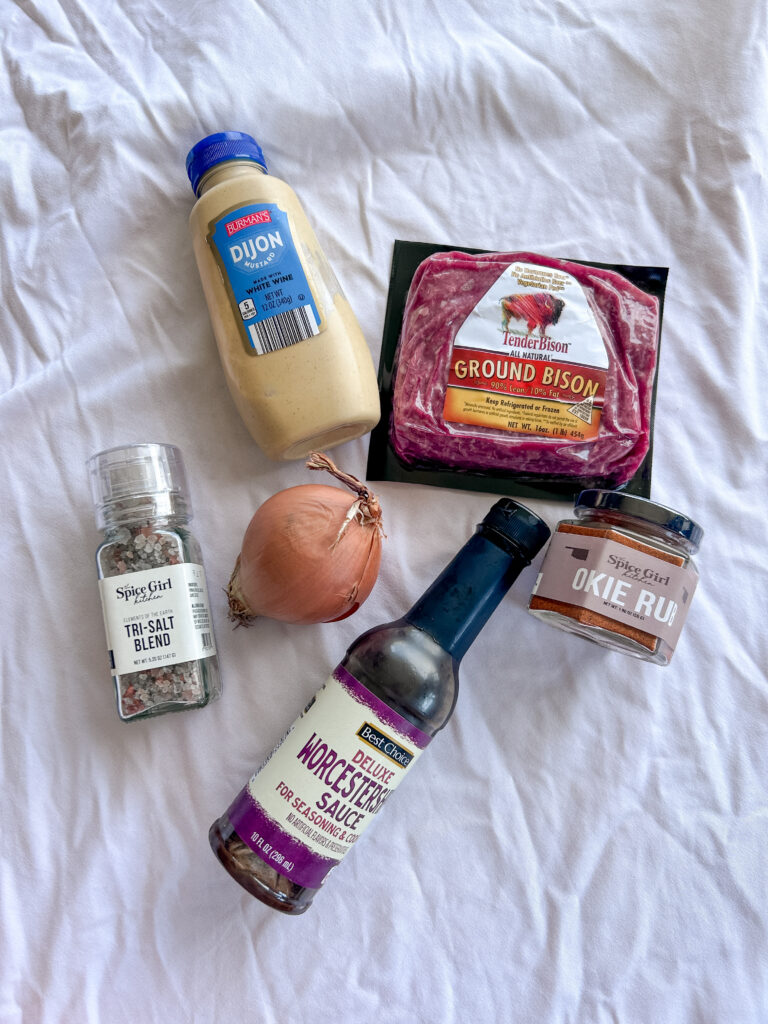
Crafting the perfect bison burger starts with carefully selected ingredients, each playing a role in flavor, texture, and moisture. Here’s a breakdown of what makes these burgers shine:
Ground Bison
The star of the show! Ground bison is leaner than ground beef, offering a slightly sweet, earthy flavor that makes it a standout choice for burgers. Its high protein content and nutrient density make it a healthier option without sacrificing taste.
Dijon Mustard
This classic French mustard is smooth, creamy, and less tangy than traditional yellow mustard, making it an ideal addition to your burger mix. Dijon mustard adds a subtle tanginess and depth of flavor while also contributing moisture and a hint of acidity that helps tenderize the bison meat.
Onion
Onions serve as a triple threat in your burger mix—adding sweetness, moisture, and a slight crunch. As the burgers cook, the onions release their juices, helping to keep the patties juicy and flavorful. They also bring a mild aromatic note that complements the bison beautifully.
THE SPICE GIRL KITCHEN OKIE RUB and SALT
This signature seasoning blend brings a peppery, smoky kick that elevates the natural flavor of the bison. The salt enhances all the ingredients, while the rub adds complexity and a touch of warmth. Don’t have this blend on hand? Get creative with your own seasoning mix—or use a combo of smoked paprika, garlic powder, onion powder, kosher salt, and cracked pepper to mimic the magic.
Worcestershire Sauce
A secret weapon for burgers, Worcestershire sauce adds a rich umami punch and slight sweetness that amplifies the flavor profile of the bison. Its complex combination of vinegar, molasses, and spices enhances both the savoriness and moisture of the patties.
Spray Avocado Oil
Avocado oil is ideal for high-heat cooking. Its neutral flavor and smoke point of up to 500°F make it perfect for grilling or pan-searing bison burgers. It helps create a golden, caramelized crust while preventing sticking without overpowering the natural flavors.
FAQs
What temperature should bison burgers be cooked to?
Bison burgers are best cooked to an internal temperature of about 135°F–140°F for medium-rare to medium, or 160°F for well-done. Because bison is leaner than beef, it’s important not to overcook it—it can dry out quickly past 160°F. Use a meat thermometer for the most accurate results and juiciest burgers.
How long do you cook bison burgers?
Cook bison burgers over medium-high heat for about 4–5 minutes per side for medium doneness, depending on thickness. Aim for a total of 8–10 minutes, flipping once, and avoid pressing down with your spatula to keep them juicy. Always go by internal temperature rather than just time.
What seasonings are best for bison burgers?
Bison has a rich, clean flavor that pairs well with bold yet balanced seasoning. I love using my Okie Rub and Tri-Salt Blend from The Spice Girl Kitchen for the perfect savory crust. If you don’t have those on hand, try a mix of smoked paprika, garlic powder, onion powder, kosher salt, and black pepper for a simple but flavorful combo.
How do you keep bison burgers from drying out?
Because bison is naturally lean, the key is to avoid overcooking and keep your seasonings simple to let the meat shine. Mix in a bit of dijon mustard or grated onion to add moisture if needed. And whatever you do—don’t press the burgers down while they cook!
Can I cook bison burgers on the stovetop instead of grilling?
Yes! Bison burgers cook beautifully in a cast iron or heavy skillet on the stovetop. Just heat a bit of oil over medium-high heat, sear each side for 4–5 minutes, and check the internal temperature to avoid overcooking. A stovetop method gives you a nice crust without needing a grill.
Is ground bison healthier than ground beef?
Yes—ground bison is lower in fat and calories than most ground beef, while still packing plenty of protein, iron, and B vitamins. It’s a great option if you’re looking for a leaner red meat alternative without sacrificing flavor.
Do bison burgers taste like beef?
Bison burgers taste similar to beef but are often described as slightly sweeter, richer, and cleaner-tasting. The flavor is less greasy, and because of the leanness, it’s more delicate—so seasoning and cooking technique matter more.
Is bison meat good for burgers?
Absolutely. Bison meat is excellent for burgers because it’s tender, flavorful, and nutrient-dense. Just remember it’s leaner than beef, so quick cooking and proper seasoning go a long way toward making it juicy and satisfying.
Is a “buffalo burger” the same as a bison burger?
Yes—in the U.S., “buffalo” and “bison” are used interchangeably, though technically, American buffalo is a misnomer for bison. So if you see “buffalo burger” on a menu or package, it’s almost always made from North American bison.
Can I freeze leftover bison burger patties?
Yes! Cooked or uncooked bison burger patties freeze really well. Let cooked burgers cool completely before wrapping and freezing. For raw patties, separate them with parchment and freeze airtight. Use within 3 months for best flavor and texture.
What to Serve with Bison Burgers
Wondering what to serve with your bison burgers? The real question is—what can’t you serve with them?! These juicy burgers pair well with all your favorite summer sides, from fresh veggies to crowd-pleasing classics.
If you’re feeding a group, try setting up a DIY burger bar with toasted buns and all the toppings: lettuce, tomato, onion, pickles, sliced cheese, crispy bacon, and a mix of condiments like mayo, mustard, BBQ sauce, and spicy aioli.
Perfect Sides for Bison Burgers:
-
Grilled Veggie Kebabs – easy to prep and cook alongside your burgers
-
Corn on the Cob – brushed with butter and sprinkled with flaky salt or chili lime seasoning
-
Summer Salads – think cucumber-tomato salad, watermelon-feta, or a crunchy coleslaw
-
Baked Beans or Cornbread – cozy and classic
-
Fruit Platters or Melon Skewers – keep things light and fresh
-
Snacky Sides – like hummus, guacamole, or a creamy spinach & onion dip with chips or pita
Whether you’re throwing a backyard BBQ or keeping it simple for dinner, these bison burger side ideas are sure to round out your meal. Mix it up, keep it seasonal, and have fun with it!
You May Also Like
If you like this recipe, make sure you try some of my other summer-inspired recipes like:
OR click here to explore my entire Okie Rub category!
Store & Reheat
Store
Fridge: Transfer the burgers to a large glass storage container with an airtight lid. Allow it to cool to room temperature before securing the lid (about 30-45 minutes; the exact time depends on the amount of meat). Store in the fridge for up to 3 days.
Freezer: You can also freeze the burgers for up to 3 months. Place the burgers in the fridge to thaw overnight for best results. Make sure the container is airtight!
Reheat
Microwave: Place burgers in a microwave-safe dish, cover with a damp paper towel, and microwave on high for 20-30 seconds at a time until heated through. This prevents overcooking and keeps the burger from drying out*
Oven: Preheat oven to 350 degrees F. Place burgers in an oven-safe dish, cover it with foil, and cook for 10-15 minutes. You can also add a splash of water or beef broth to the dish to prevent the burgers from drying out*
Stovetop: Place the burgers on a pan over medium-low heat. Add a splash of water or beef broth to the pan to prevent the burgers from drying out. Cover with a lid and cook for 5-7 minutes, flipping halfway through. Repeat until heated through.*
* Total time depends on the amount you are reheating and the thickness of the burgers.

Juicy 5-Ingredient Bison Burger Recipe (Grilled or Stovetop)
Ingredients
Method
- Preheat your grill, grill pan, or cast iron skillet over medium-high heat. Spray with avocado oil.
- Add all ingredients to a bowl and mix together until well combined. Form into 4 even patties. Make a thumbprint in the center of each patty.
- Cook for 4-5 minutes per side (depending on the thickness of the burgers) or until desired doneness. Use a meat thermometer to help determine when they are done (135°F–140°F for medium-rare to medium. Bison is lean and dries out quickly past 160°F). Do not press down on the burgers as they cook to keep those juices locked in.
- Allow your cooked burgers to rest for 3-5 minutes before serving. This gives the juices time to redistribute throughout the patty, ensuring every bite is juicy and flavorful.
- Serve with soft, lightly toasted buns and moisture-boosting toppings like tomatoes, sautéed onions, mushrooms, or a creamy burger sauce.
Notes
Tips for the Best Bison Burgers:
- Cook Temperature: For juicy burgers, cook to 135°F–140°F for medium-rare to medium. Bison is lean and dries out quickly past 160°F.
- Best Seasoning: I use my Okie Rub and Tri-Salt Blend from The Spice Girl Kitchen. Or use a simple blend of smoked paprika, garlic powder, onion powder, salt, and pepper.
- Add Moisture: Optional—but helpful! Mix in a tablespoon of olive oil, grated onion, Dijon mustard, or mayo to keep patties moist.
- No Grill? No Problem: Cook your bison burgers in a cast iron skillet over medium-high heat, about 4–5 minutes per side.
- Serving Ideas: Pair with sweet potato fries, grilled corn, or a fresh summer salad.
- Storage: Store cooked patties in the fridge up to 3 days or freeze up to 3 months. Reheat gently in a skillet or oven to avoid drying out.
This post was all about a Bison Burger Recipe!
Did you make this recipe? Make sure to tag me @thespicegirlkitchen_ on Instagram or @thespicegirlkitchen on TikTok! I love seeing your recreations! I will be your ultimate hype woman!
Want to learn more about Kelsey? Click here to read her story!