Ingredients
Equipment
Method
Stand Mixer Method
- In the bowl of a stand mixer, combine warm water (about 105°F), honey (or sugar), and yeast. Stir and let sit for 5–10 minutes, until the surface looks foamy and bubbly — this means your yeast is active and ready.
- Add flour, cinnamon, salt, and softened butter to the yeast mixture. Using the dough hook attachment, mix on low speed for about 1 minute, just until the dough starts to come together into a rough, shaggy ball.
- Increase to medium speed and knead for 5–6 minutes, or until the dough is smooth, elastic, and slightly tacky but not sticky. If it’s too sticky, sprinkle in 1–2 tbsp of flour as needed.
- With the mixer on low speed, add the soaked and dried raisins. Mix just until evenly distributed throughout the dough — about 30 seconds.
- Remove the dough from the bowl, form it into a ball, and place it in a lightly oiled mixing bowl. Cover with a clean towel and let rise in a warm spot for 1–1½ hours, or until doubled in size.
- Gently punch down the dough to release air bubbles. Shape into a smooth round loaf and place it seam-side down on parchment paper. Cover loosely and let it rest for 30–40 minutes, until puffy.
- While the dough rises, preheat your oven to 450°F (232°C) with your Dutch oven (lid on) inside for at least 30 minutes to build up heat and steam potential.
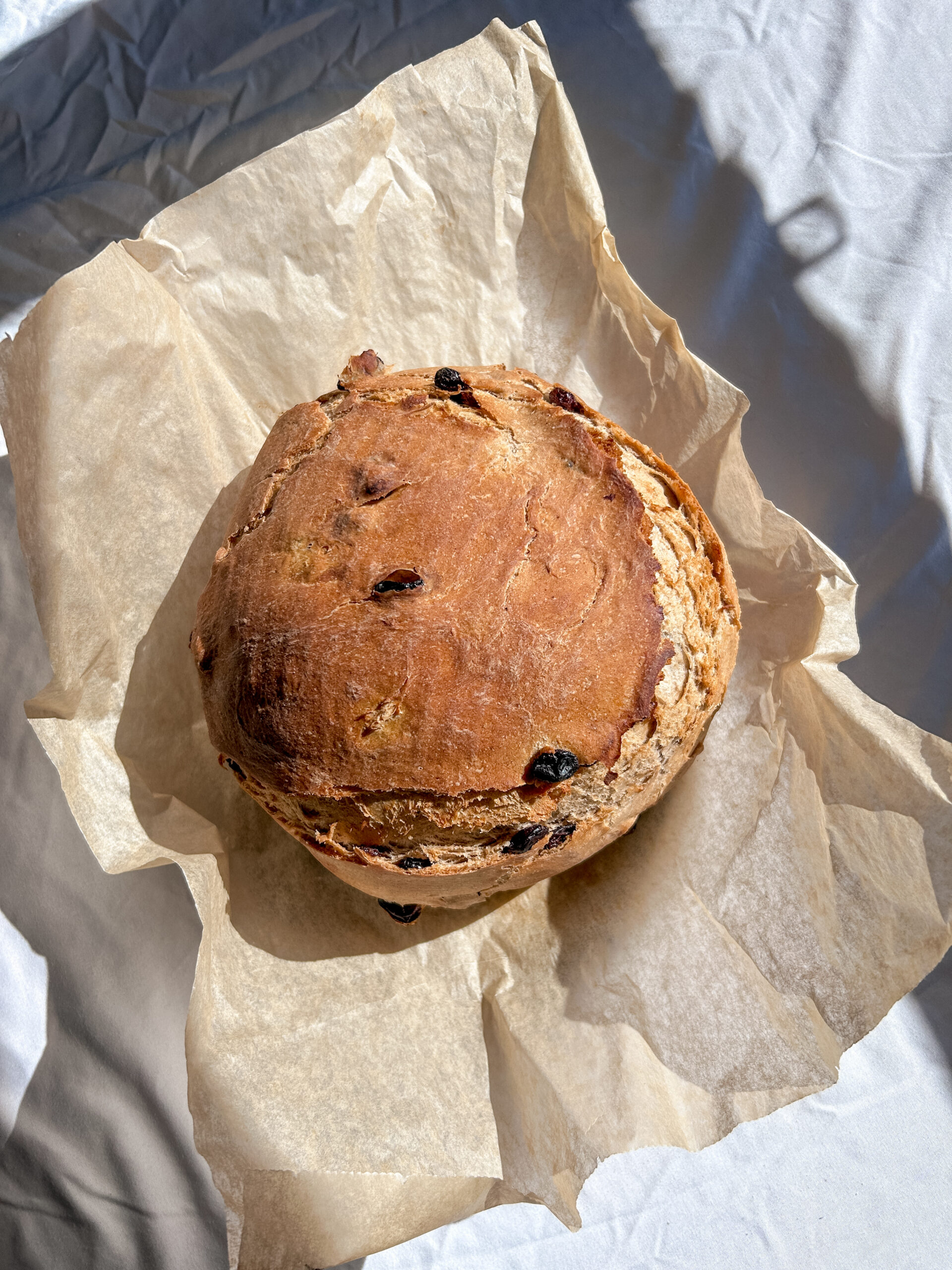
- Carefully transfer the dough (on parchment) into the hot Dutch oven. Cover and bake for 30 minutes, then uncover and bake another 10–12 minutes, until the crust is golden brown and crisp.Tip: Check your loaf around the 25–30 minute mark, especially if your oven runs hot or you’re using a light-colored Dutch oven — sweet doughs with honey and cinnamon tend to brown faster. If the top is already golden before uncovering, tent loosely with foil and finish baking at 400°F. The bread is fully baked when the internal temperature reaches 190–200°F in the center.
- Transfer the loaf to a wire rack and cool for at least 1 hour before slicing. Cutting too early compresses the crumb and makes the inside gummy — patience makes perfect!
By Hand Method
- In a large mixing bowl, whisk together warm water (about 105°F), honey (or sugar), and yeast. Let it sit for 5–10 minutes, until the mixture looks foamy on top — that’s how you know your yeast is alive and ready.
- Add flour, cinnamon, salt, and softened butter. Use a wooden spoon or sturdy spatula to stir until a rough, shaggy dough forms — it should be slightly sticky but starting to pull away from the bowl.
- Lightly flour your countertop and turn the dough out onto it. Knead for about 8–10 minutes, folding and pressing until the dough becomes smooth and elastic. If it’s sticking to your hands, dust in a little more flour, just a tablespoon at a time.
- Flatten the dough slightly, scatter the soaked raisins over top, and knead for another minute or two until the raisins are evenly mixed in.
- Shape the dough into a ball and place it in a lightly oiled bowl. Cover with a clean towel and let rise in a warm spot for 1–1½ hours, until doubled in size.
- Gently punch down the dough, shape it into a round loaf, and place it seam-side down on parchment paper. Cover again and let it rest for 30–40 minutes, until puffy.
- While the dough rests, preheat your oven to 450°F (232°C) with your Dutch oven (lid on) inside for at least 30 minutes.
- Carefully transfer the dough (on parchment) into the hot Dutch oven. Cover and bake for 30 minutes, then uncover and bake another 10–12 minutes, until the crust is golden brown and crisp.Tip: Check your loaf around the 25–30 minute mark, especially if your oven runs hot or you’re using a light-colored Dutch oven — sweet doughs with honey and cinnamon tend to brown faster. If the top is already golden before uncovering, tent loosely with foil and finish baking at 400°F. The bread is fully baked when the internal temperature reaches 190–200°F in the center.
- Lift the loaf out and cool on a wire rack for at least 1 hour before slicing. This helps the crumb finish setting for the perfect soft texture.
Video
Notes
- Storage: Once cooled, store your bread in a sealed bag or airtight container at room temperature for up to 3 days. For longer storage, slice the loaf and freeze it — you can toast slices straight from frozen.
- Dutch Oven Tip: Preheat your Dutch oven for at least 30 minutes before baking. That trapped steam is the secret to your soft interior and crisp, bakery-style crust.
- Water Temperature: Use warm water around 105°F — this activates the yeast without killing it. If the water is too hot, it can kill the yeast and prevent rising; if it’s too cool, the yeast will activate sluggishly, leading to a dense loaf.
- Cinnamon Strength: Feel free to bump the cinnamon up to 1½ tbsp if you love a stronger spice profile. For milder sweetness, use 1 tbsp honey instead of 2.
- Raisin Prep: Soaking the raisins before mixing them in keeps them plump and helps prevent burnt, chewy bits during baking.
- Using Instant Yeast: You can substitute instant yeast for active dry yeast in equal amounts. Skip the activation step and mix it directly into the dry ingredients — the rise time may be slightly shorter, so start checking your dough about 10 minutes early.
- Texture Control: For a slightly chewier crumb, replace half of the all-purpose flour (1½ cups) with bread flour.
- Serving Ideas: Toast slices and spread with salted butter, almond butter, or honey for a simple breakfast — or use it for the best French toast of your life.
- Nutrition (per slice, 12 servings): 180 calories, 2g fat, 37g carbs, 4g protein, 2g fiber. Nutrition information is an estimate. Actual values may vary based on specific ingredients and brands used.